
Turkish Revani
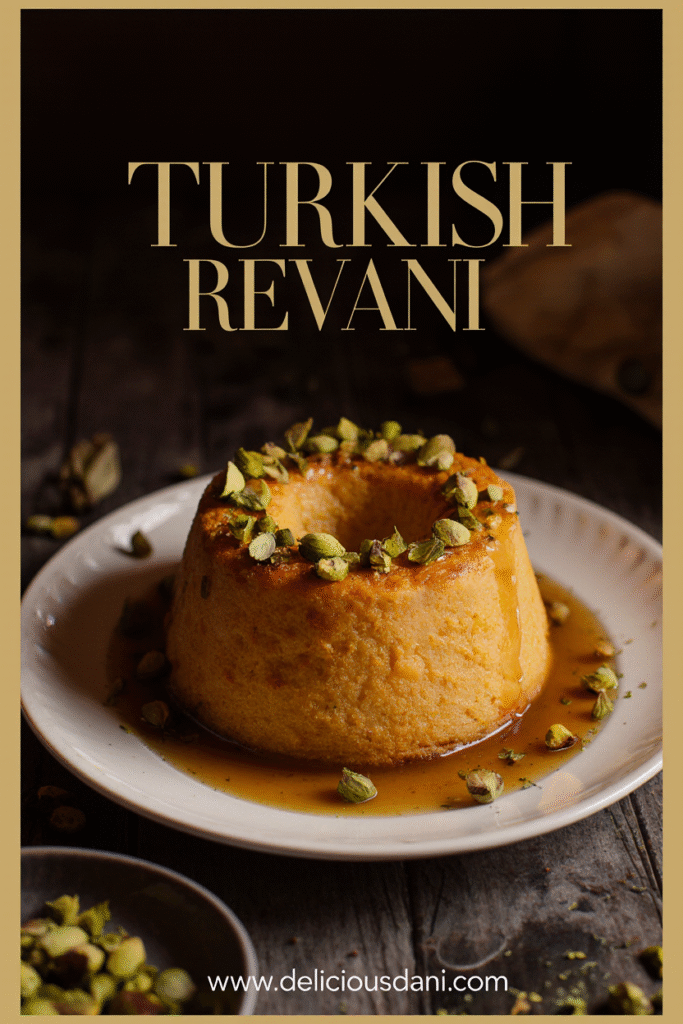
Let me introduce you to one of the most beloved and iconic desserts in Turkish cuisine: Revani – a lusciously moist, syrup-soaked semolina cake that has been gracing Turkish tables for centuries and continues to captivate dessert lovers around the world! I first tasted authentic revani during a trip to Istanbul, in a small pastry shop near the Grand Bazaar where the baker’s family had been making it for three generations. That first bite was a revelation: the tender, spongy texture that absorbed sweet syrup like a dream, the delicate citrus aroma, the subtle nuttiness of semolina, and that perfect balance of sweetness that never felt cloying. I came home determined to recreate that experience, and after countless batches and conversations with Turkish friends, I’ve perfected this recipe that delivers authentic results every single time. What makes revani truly special is its unique texture – unlike any other cake you’ve tried – created by the combination of semolina flour, yogurt, and that glorious lemon-infused syrup that gets poured over the hot cake. The result is a dessert that’s impossibly moist, stays fresh for days, and has a sophisticated flavor profile that appeals to both traditional dessert lovers and modern palates. Whether you’re serving it for a special celebration, bringing it to a potluck, or simply want to explore the wonderful world of Middle Eastern sweets, this revani will transport you straight to a Turkish tea garden!
Overview of Recipe Content
Turkish Revani is perfect for holiday celebrations (especially Ramadan and Eid), special family gatherings, afternoon tea or coffee service, potluck contributions, exploring Middle Eastern cuisine, impressing dinner guests with something unique, or anytime you’re craving a not-too-sweet dessert that’s elegant and satisfying. It’s a great recipe because it uses simple, accessible ingredients (including semolina which creates that distinctive texture), requires no special equipment or advanced techniques, actually improves in flavor as it sits (making it perfect for advance preparation), and delivers consistently impressive results that look and taste professional. The flavor profile is beautifully balanced and sophisticated: subtle sweetness from the syrup, bright citrus notes from lemon zest and juice, gentle tang from yogurt, nutty undertones from semolina, aromatic hints of vanilla, and optional floral notes from rose water or orange blossom water. This recipe is perfect for adventurous bakers wanting to explore Turkish desserts, anyone who loves syrup-soaked cakes like tres leches, people seeking desserts that aren’t overly sweet, hosts wanting something unique and conversation-starting, or anyone with Middle Eastern heritage looking to recreate authentic family flavors. It’s naturally nut-free (unless garnished with almonds) and can be adapted for various dietary needs.
Ingredients
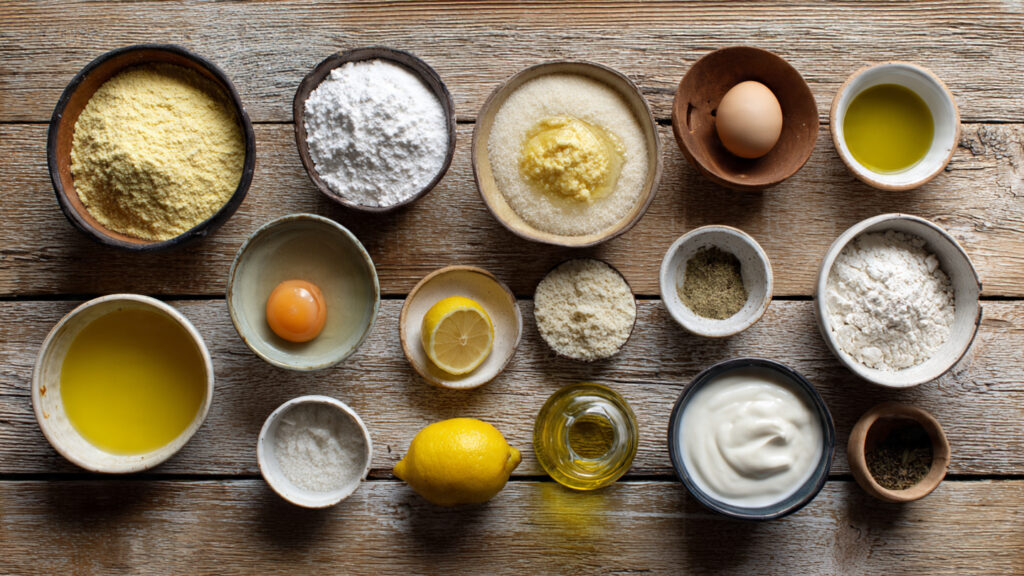
For the Revani Cake:
| Ingredient | Quantity |
|---|---|
| Granulated sugar | 1 cup (200g) |
| Large eggs, room temperature | 4 |
| Plain yogurt, room temperature | 1 cup (240g) |
| Vegetable oil or melted butter | ⅔ cup (160ml) |
| Vanilla extract | 1 teaspoon |
| Lemon zest | From 1 lemon |
| Fine semolina flour | 1½ cups (240g) |
| All-purpose flour | ½ cup (65g) |
| Baking powder | 2 teaspoons |
| Baking soda | ½ teaspoon |
| Salt | ¼ teaspoon |
| Ground cardamom or cinnamon (optional) | ½ teaspoon |
For the Lemon Syrup:
| Ingredient | Quantity |
|---|---|
| Granulated sugar | 2 cups (400g) |
| Water | 1½ cups (360ml) |
| Fresh lemon juice (about 1 lemon) | 3 tablespoons |
| Lemon peel strips | 2-3 strips |
| Rose water or orange blossom water (optional) | 1 teaspoon |
| Cinnamon stick (optional) | 1 |
For Garnish:
| Item | Purpose |
|---|---|
| Sliced almonds or whole blanched almonds | Traditional topping |
| Shredded coconut | Regional variation |
| Ground pistachios | Luxurious garnish |
| Whipped cream or kaymak (clotted cream) | Serving accompaniment |
| Fresh berries (optional) | Modern addition |
Tools Needed
- 9×13-inch baking pan (standard size)
- Large mixing bowl
- Medium bowl (for dry ingredients)
- Electric hand mixer or stand mixer
- Whisk
- Rubber spatula
- Medium saucepan (for syrup)
- Measuring cups and spoons
- Fine-mesh strainer (for semolina)
- Microplane or zester
- Sharp knife (for scoring)
- Toothpick or cake tester
- Ladle or large spoon (for pouring syrup)
- Cooling rack
Suggested Substitutions and Additions
Semolina Options:
- Fine semolina: Essential for authentic texture (look in Middle Eastern or Italian sections)
- Coarse semolina: Can work but creates grainier texture
- Cream of wheat: Very similar, excellent substitute
- Combination: Half semolina, half all-purpose flour for lighter texture
- Cannot substitute with regular flour alone – you’ll lose the distinctive revani texture
Yogurt Alternatives:
- Plain full-fat yogurt: Best choice for richness and tang
- Greek yogurt: Thicker, may need to thin with 2 tablespoons milk
- Dairy-free yogurt: Coconut or almond yogurt work well
- Sour cream: Creates richer, denser cake
- Kefir: Tangier but delicious alternative
Oil vs. Butter:
- Vegetable oil: Creates moister, lighter cake (traditional)
- Melted butter: Richer flavor, slightly denser
- Olive oil: Authentic in some regions, adds fruity notes
- Coconut oil: Works for dairy-free version
- Half oil, half melted butter: Best of both worlds
Syrup Flavor Variations:
- Add 1 teaspoon rose water for floral Turkish touch
- Use orange blossom water for Lebanese-style
- Add 2-3 cardamom pods for aromatic depth
- Include 1 cinnamon stick while simmering
- Add 1 tablespoon honey to syrup for complexity
- Use orange juice instead of half the water
- Add vanilla extract to syrup
Sugar Modifications:
- Standard granulated sugar: Traditional choice
- Reduce syrup sugar: Can reduce to 1¾ cups if you prefer less sweet
- Honey syrup: Replace half syrup sugar with honey
- Coconut sugar: Creates deeper, caramel-like flavor
- Note: This is a syrup-soaked dessert, so it will be sweet – that’s authentic!
Flavor Enhancements for Cake:
- Add ½ teaspoon ground cardamom for warmth
- Include ½ teaspoon cinnamon for spice
- Add orange zest instead of or in addition to lemon
- Mix in ¼ cup shredded coconut to batter
- Add 1 teaspoon mahlab (ground cherry pit, very traditional)
- Include ½ teaspoon mastic gum (ground, very authentic)
Garnish Variations:
- Almonds: Most traditional, whole or sliced
- Pistachios: Luxurious, creates beautiful green contrast
- Coconut: Common in many regions
- Hazelnuts: Turkish alternative
- Whipped cream or kaymak: Served on the side
- Fresh fruit: Modern addition, not traditional but lovely
Regional Variations:
- Greek Ravani: Often includes brandy and orange
- Egyptian Basbousa: Similar but often includes coconut
- Turkish Revani: Lemon-forward with almonds
- Cypriot: May include mahlab and mastic
Dietary Modifications:
- Gluten-reduced: Use gluten-free flour blend for the all-purpose portion (semolina contains gluten)
- Dairy-free: Use dairy-free yogurt and oil instead of butter
- Lower sugar: Reduce cake sugar to ¾ cup; reduce syrup sugar to 1½ cups
- Vegan: Use flax eggs (4 tablespoons ground flax + 12 tablespoons water) and dairy-free yogurt
How to Make Turkish Revani
Step 1: Prepare Pan and Preheat Oven
Begin by preheating your oven to 350°F (175°C). Position the rack in the center of the oven for even baking. While the oven preheats, prepare your 9×13-inch baking pan meticulously – this is important for clean serving and easy syrup absorption! Grease the pan generously with butter or oil, making sure to get into all corners and edges. For extra insurance, you can line the bottom with parchment paper, though it’s not strictly necessary.
If you’re using almond garnish in the traditional style, arrange whole blanched almonds or sliced almonds in a decorative pattern on the bottom of the greased pan – these will end up on top when you flip the cake, or you can skip this and add them on top before baking. Set your prepared pan aside. Having everything ready before you start mixing ensures smooth, efficient baking.
Step 2: Sift and Combine Dry Ingredients
In a medium bowl, combine the fine semolina flour and all-purpose flour. It’s important to sift the semolina if it has any lumps – use a fine-mesh strainer to ensure a smooth texture. Add the baking powder, baking soda, salt, and any spices you’re using (cardamom or cinnamon if desired). Whisk everything together thoroughly for about 30 seconds to ensure even distribution of the leavening agents.
The combination of baking powder and baking soda is deliberate: the baking powder provides lift, while the baking soda reacts with the acidic yogurt to create additional rise and helps achieve that characteristic tender crumb. The semolina gives revani its unique, slightly grainy but tender texture that’s completely different from regular cake – this is what makes revani special! Set this bowl aside.
Step 3: Beat Eggs and Sugar Until Fluffy
This step is crucial for creating the light, spongy texture that makes revani so special! In a large mixing bowl, combine the room temperature eggs and granulated sugar. Using an electric hand mixer or stand mixer fitted with the whisk attachment, beat on medium-high speed for 5-7 minutes. Yes, a full 5-7 minutes! The mixture should become very pale, thick, fluffy, and at least double in volume.
You’re looking for the “ribbon stage” – when you lift the beaters, the mixture should fall back into the bowl in a thick ribbon that holds its shape on the surface for a few seconds before disappearing. This extended beating incorporates air into the eggs, which helps create lift and that characteristic spongy texture. The mixture should be almost white in color and very fluffy. Don’t skip or rush this step – it’s the foundation of perfect revani!
Step 4: Add Wet Ingredients
Reduce the mixer speed to low. Add the room temperature yogurt, oil (or melted butter), vanilla extract, and lemon zest to the egg-sugar mixture. Beat on low speed for about 1 minute, just until everything is well combined and smooth. The mixture should be thick, creamy, and uniform with no streaks of yogurt visible.
The yogurt serves multiple purposes: it adds moisture, creates tenderness through its acidity, provides a subtle tang that balances the sweetness, and helps create that signature soft, melt-in-your-mouth texture. The lemon zest adds bright, citrusy aroma that’s essential to authentic revani. Make sure all wet ingredients are at room temperature – cold ingredients can deflate the fluffy egg mixture and cause the oil to separate. Scrape down the sides and bottom of the bowl to ensure even mixing.
Step 5: Gently Fold in Dry Ingredients
Remove the bowl from the mixer (or turn it off if using a stand mixer). Add all the dry ingredients (the semolina-flour mixture) to the wet ingredients at once. Using a rubber spatula, gently fold the dry ingredients into the wet mixture using broad, sweeping strokes. Fold from the bottom of the bowl up and over, rotating the bowl as you go.
Mix just until you no longer see dry flour or semolina – the batter should be smooth, thick, and somewhat pourable, similar to a thick pancake batter. Don’t overmix! Overmixing will deflate the air you worked so hard to incorporate and can develop gluten, making the cake tough instead of tender. The whole folding process should take only 30-40 strokes. The batter will be thicker than regular cake batter due to the semolina, and you may see tiny semolina granules – this is perfect!
Step 6: Bake Until Golden
Pour the batter into your prepared pan and spread evenly with a spatula, smoothing the top. If you didn’t arrange almonds on the bottom of the pan, you can arrange them decoratively on top of the batter now, pressing them in slightly. Some people create a diamond pattern with almond slices for traditional presentation.
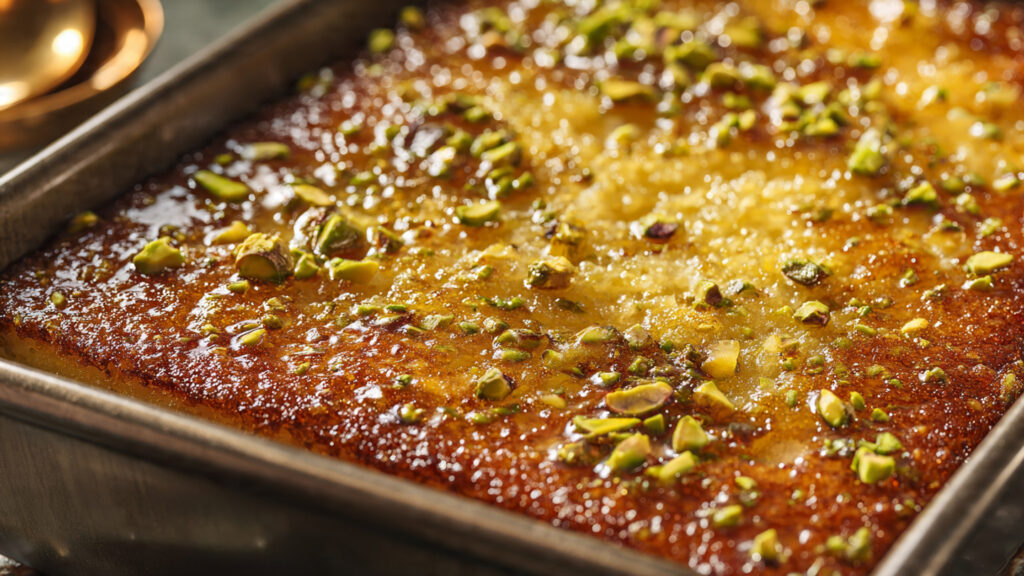
Place the pan in the center of your preheated 350°F (175°C) oven and bake for 30-35 minutes. The revani is done when the top is golden brown, the edges are pulling away slightly from the pan, and a toothpick inserted into the center comes out clean or with just a few moist crumbs. The top should spring back when lightly pressed, and you may notice a wonderful aroma of baked semolina, lemon, and vanilla filling your kitchen.
Important: Don’t overbake! Revani should be moist even before the syrup, so it’s better to slightly underbake than overbake. Check at 30 minutes and add time in 2-minute increments if needed. Ovens vary, so use visual and tactile cues along with time.
Step 7: Score the Hot Cake
As soon as the revani comes out of the oven, while it’s still piping hot in the pan, immediately score it into diamond or square shapes using a sharp knife. This is traditional and serves two important purposes: it allows the syrup to penetrate deeply and evenly throughout the cake, and it makes serving much easier later.
To create diamonds: cut diagonal lines about 1½ inches apart going one direction, then cut diagonal lines the other direction, creating a diamond pattern. To create squares: simply cut straight lines horizontally and vertically. Cut all the way through to the bottom of the pan. You can place one almond in the center of each piece if you like. Leave the cake in the pan – don’t remove it yet!
Step 8: Prepare the Lemon Syrup
While the cake is baking (or right after), prepare your syrup – timing is important! In a medium saucepan, combine the sugar, water, lemon juice, and lemon peel strips (and cinnamon stick if using). Bring to a boil over medium-high heat, stirring occasionally until the sugar completely dissolves.
Once boiling, reduce heat to medium-low and let it simmer gently for 10-12 minutes without stirring. The syrup should thicken slightly and become glossy – it should coat the back of a spoon but still pour easily, similar to the consistency of thin honey. Remove from heat and discard the lemon peel strips and cinnamon stick. If using rose water or orange blossom water, stir it in now. Let the syrup cool for about 10 minutes – it should be warm but not boiling hot when you pour it over the cake.
Step 9: Soak with Syrup (The Magic Moment!)
This is the most important step for perfect revani! The hot cake needs to meet warm (not hot, not cold) syrup. If the syrup is too hot, it will make the cake soggy; if it’s too cold, it won’t absorb properly. The cake should be hot from the oven, and the syrup should be warm.
Slowly and evenly pour the warm syrup over the entire surface of the hot, scored cake, making sure to pour along the cut lines so the syrup penetrates deep into the cake. Pour in stages, letting each addition soak in before adding more. Use all the syrup! It will seem like a lot – that’s correct! You should hear a wonderful sizzling sound as the hot cake absorbs the syrup.
Use a spoon to encourage syrup into the cuts and corners. The cake will absorb most of the syrup within 10-15 minutes, though some will pool at the bottom – this is perfect! Let the revani sit at room temperature for at least 3-4 hours (or overnight) to fully absorb the syrup and for the flavors to meld. The longer it sits, the better it tastes!
Step 10: Serve and Garnish
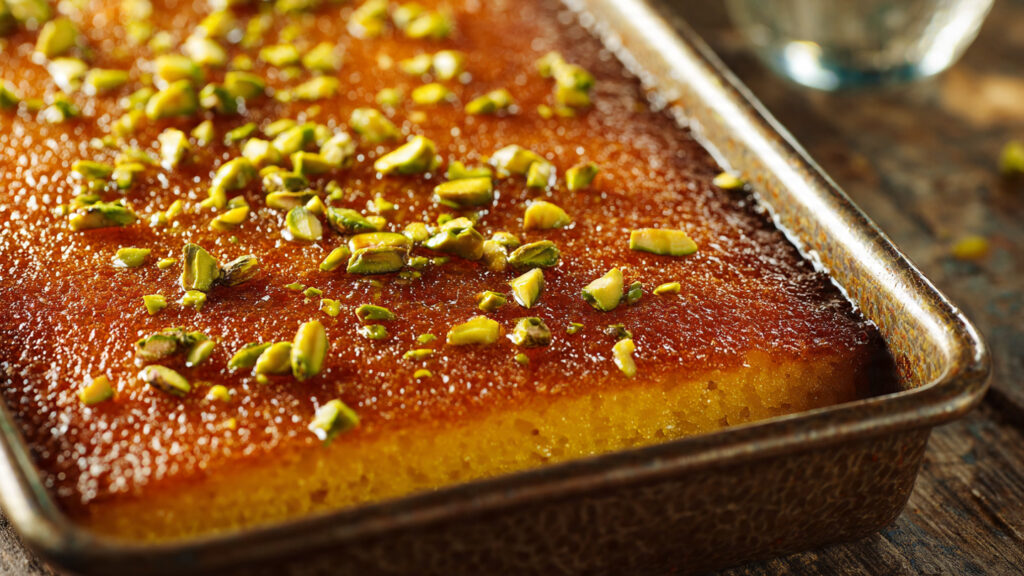
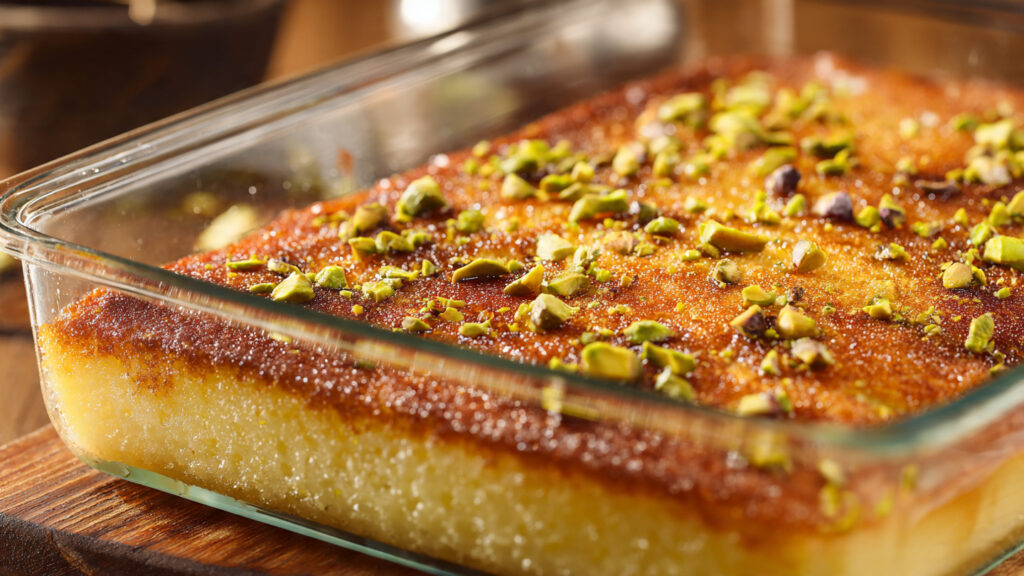
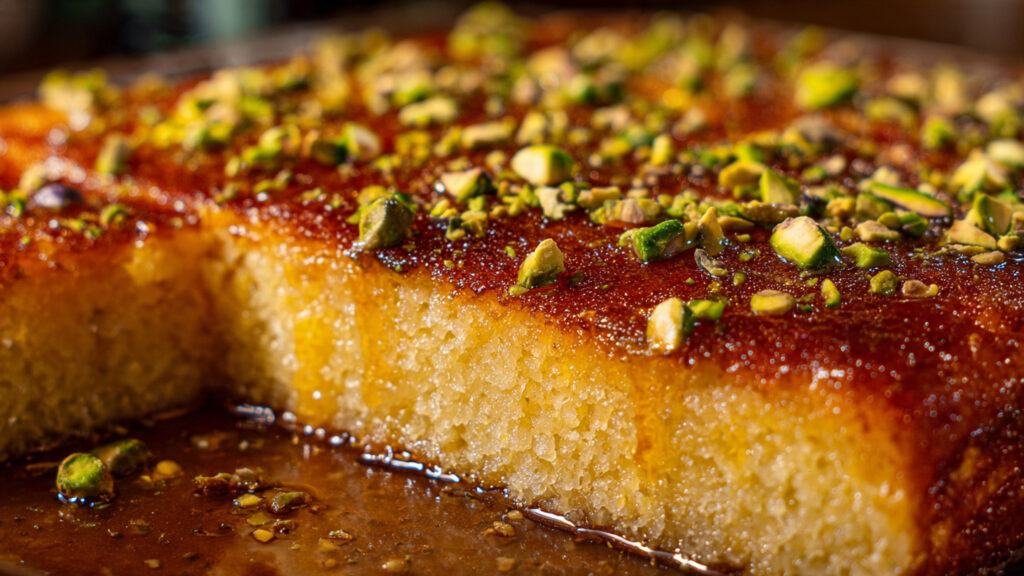
After the revani has fully absorbed the syrup and cooled (at least 3-4 hours, but overnight is even better), it’s ready to serve! Cut along the original score lines to create individual pieces. Use a spatula to lift each piece out of the pan. The revani should be moist, glistening with syrup, and incredibly tender.
Traditionally, revani is served at room temperature, though some people prefer it slightly chilled. Garnish each piece with a dollop of whipped cream or kaymak (Turkish clotted cream) if desired. You can also sprinkle with additional chopped pistachios or a light dusting of shredded coconut. Serve with strong Turkish coffee or hot tea for the authentic experience!
What to Serve with It
Turkish Revani is traditionally served as a standalone dessert with Turkish tea or coffee, but certain accompaniments enhance the experience beautifully. The classic pairing is strong Turkish coffee (türk kahvesi) – the slight bitterness of the coffee perfectly balances the sweet syrup-soaked cake. Turkish black tea (çay) served in those iconic tulip-shaped glasses is equally traditional and authentic.
For a more luxurious presentation, serve each piece with a dollop of kaymak (Turkish clotted cream) or thick whipped cream on the side. The rich, creamy dairy provides a wonderful contrast to the sweet, syrupy cake. Vanilla ice cream is a modern addition that many people love, especially when the revani is served slightly warm.
In some regions, revani is served with fresh fruit – particularly strawberries, raspberries, or sliced oranges – to add freshness and cut through the sweetness. A light dusting of ground pistachios or cinnamon on top adds both visual appeal and complementary flavor.
For a full Turkish dessert experience, create a dessert table with revani alongside other traditional sweets like baklava, Turkish delight (lokum), künefe, or tulumba. Serve with multiple pots of tea and create a social atmosphere where guests can linger and enjoy conversation – this is the traditional Turkish way!
For beverages beyond tea and coffee, mint tea, sage tea (adaçayı), or even pomegranate juice pair wonderfully. Some people enjoy revani with a glass of cold ayran (Turkish yogurt drink) for an interesting sweet-savory contrast. For special occasions, a glass of sweet dessert wine or Raki (Turkish spirit) can accompany the dessert for adults.
Tips for Making It Perfect
- Use fine semolina, not coarse: This is crucial! Fine semolina (sometimes labeled as “semolina flour”) creates the characteristic tender, moist texture. Coarse semolina will make the cake grainy and heavy. Look for it in Middle Eastern stores, Italian sections (labeled “semola”), or online. If you can only find coarse, pulse it in a food processor to make it finer, or use cream of wheat as a substitute.
- Beat eggs and sugar for the full time: Don’t rush the 5-7 minutes of beating! This is what creates the light, airy, sponge-like texture that makes revani special. The mixture should be pale, thick, and fluffy – at least double in volume. This step incorporates air that helps the cake rise and creates that characteristic tender crumb.
- Temperature is everything for the syrup: This is the most important technical detail! The cake must be hot from the oven, and the syrup should be warm (not boiling, not cold). If both are the same temperature, the cake won’t absorb properly. The temperature difference creates the perfect conditions for maximum absorption. Wait 10 minutes after making the syrup before pouring, and pour it over the cake immediately after removing from oven.
- Don’t skip the scoring: Cutting the hot cake immediately after baking allows the syrup to penetrate deeply into the interior, not just soak the surface. This ensures every bite is evenly moist and flavorful. Plus, it makes serving much easier and creates that traditional revani appearance.
- Be patient with soaking time: While it’s tempting to dig in immediately, revani tastes exponentially better after sitting for several hours (or overnight). This time allows the syrup to distribute evenly throughout the cake, the flavors to meld and deepen, and the texture to achieve that perfect melt-in-your-mouth quality. Many say revani is best on the second or third day!
- Use room temperature ingredients: Cold eggs won’t whip up as fluffy, and cold yogurt can deflate your batter and cause the oil to separate. Take eggs and yogurt out of the refrigerator 30-60 minutes before baking, or quick-warm them: place eggs in a bowl of warm water for 5 minutes, and microwave yogurt for 10-15 seconds.
- Don’t reduce the syrup too much: Yes, revani is meant to be quite sweet and very syrupy – that’s authentic! Western palates sometimes find it too sweet, but resist the urge to drastically reduce the syrup. You can reduce the sugar by ¼ cup if you must, but the traditional version uses all the syrup and is meant to be a special-occasion treat, not an everyday dessert. The yogurt’s tanginess helps balance the sweetness.
Storage Instructions
Room Temperature: Store revani covered at room temperature for up to 5 days. Keep it in the baking pan covered with plastic wrap or aluminum foil, or transfer pieces to an airtight container. The high sugar content of the syrup acts as a preservative, and revani actually improves with time as the flavors develop and meld. Room temperature is the preferred storage method for the best texture and flavor.
Refrigerator: While not traditional, you can refrigerate revani for up to 1 week if preferred, especially in hot climates. Cover tightly with plastic wrap or store in an airtight container. Bring to room temperature before serving for the best flavor and texture, or serve chilled if you prefer – some people actually love it cold! The cake will firm up slightly when cold but will soften again at room temperature.
Freezer: Revani freezes surprisingly well for up to 2 months! Wrap individual pieces tightly in plastic wrap, then place all wrapped pieces in a freezer bag, or freeze the entire pan covered tightly with plastic wrap and then foil. To serve, thaw overnight in the refrigerator or at room temperature for 2-3 hours. The texture remains remarkably good after freezing.
Serving Notes: Revani is traditionally served at room temperature, which brings out the flavors most fully. Some people prefer it slightly warm – you can microwave individual pieces for 10-15 seconds to warm them gently. Avoid reheating the whole pan as it can make the cake overly soft.
Longevity: One of the beautiful things about syrup-soaked desserts like revani is their incredible shelf life. The sugar in the syrup preserves the cake, and it stays moist and delicious for days. In fact, many people find that revani tastes even better on day 2, 3, or 4 as the flavors continue to develop and deepen. This makes it perfect for advance preparation!
Gift-Giving: Revani makes a wonderful gift! Cut into pieces and arrange in a decorative tin or box, or give the whole pan. Include a note that it can be stored at room temperature for up to 5 days and actually gets better with time. This is a traditional gesture during holidays like Ramadan and Eid.
General Information
Revani (also spelled ravani, revane, or basbousa in some regions) is a beloved semolina cake that appears throughout the former Ottoman Empire territories, with each country claiming its own version and slight variations. The dessert’s history dates back centuries, with some food historians tracing semolina-based sweets to the Byzantine era, while others attribute its development to Ottoman palace kitchens.
The name “revani” has an interesting, somewhat disputed origin. One popular legend claims it was named after a 17th-century Ottoman poet named Revânî, though food historians debate this. What’s certain is that by the 17th century, syrup-soaked semolina cakes were well-established in Ottoman cuisine and had spread throughout the empire’s vast territories.
Each region developed its own variation: in Turkey, revani is typically made with yogurt and lemon; in Greece, ravani often includes brandy and orange; in Egypt and other Arab countries, similar desserts called basbousa often include coconut and are cut into diamond shapes. Despite regional differences, all share the fundamental characteristics: semolina flour, syrup-soaking, and that distinctive tender, moist texture.
Semolina (made from durum wheat) has been cultivated in the Mediterranean and Middle East for millennia. Its use in desserts likely developed because it was widely available, inexpensive, and created a unique texture that regular wheat flour couldn’t replicate. The slightly grainy texture of semolina, when combined with the right proportions of eggs and yogurt, creates that signature revani crumb – tender but structured, moist but not soggy.
The tradition of syrup-soaked desserts (known as “şerbetli tatlılar” in Turkish, meaning “sherbet desserts”) is central to Turkish and Middle Eastern cuisine. The technique of pouring sugar syrup over hot baked goods maximizes absorption and creates incredible moisture that lasts for days – crucial in hot climates before refrigeration was common.
Today, revani remains a staple in Turkish pastry shops, home kitchens, and special occasions. It’s especially popular during Ramadan for iftar (breaking fast) and is often served at celebrations, weddings, and religious holidays. The dessert represents hospitality, celebration, and the rich culinary heritage of the Ottoman Empire that continues to influence cuisines throughout the Mediterranean, Balkans, and Middle East.
Frequently Asked Questions (FAQ)
Q: Can I use coarse semolina instead of fine semolina? A: While you technically can, the texture will be significantly different – more grainy and heavy rather than tender and delicate. Fine semolina (semolina flour) is essential for authentic revani texture. If you only have coarse semolina, pulse it in a food processor for 30-60 seconds to make it finer, though it won’t be quite as fine as purchasing fine semolina. Cream of wheat is a better substitute if you can’t find fine semolina – it’s very similar in texture and works excellently.
Q: My revani absorbed all the syrup but seems soggy – what went wrong? A: Soggy revani usually happens when the syrup was too hot when poured over the cake. The syrup should be warm but not boiling – let it cool for about 10 minutes after making it. Also, make sure your cake is fully baked before adding syrup; underbaked cake will be structurally weak and turn mushy. Finally, be sure to score the cake deeply before adding syrup so it can penetrate evenly. Properly made revani should be very moist but still hold its shape when cut.
Q: Can I make revani without yogurt? A: Yogurt is really important for authentic revani – it provides moisture, creates the tender crumb through its acidity, and adds a subtle tang that balances sweetness. However, if you absolutely must substitute, use sour cream (similar results) or buttermilk (reduce to ¾ cup and add 2 tablespoons oil). Milk alone won’t work as well because it lacks the necessary acidity and thickness. Some Turkish grandmothers use kefir successfully.
Q: Why didn’t my revani rise properly? A: Poor rise is usually caused by: (1) Not beating the eggs and sugar long enough – you need a full 5-7 minutes for proper aeration, (2) Overmixing after adding flour, which deflates the air you incorporated, (3) Old or insufficient baking powder, or (4) Opening the oven door too early. Make sure your baking powder is fresh (test by adding a pinch to warm water – it should fizz vigorously), beat eggs thoroughly, fold gently, and don’t open the oven for the first 25 minutes.
Q: Is revani supposed to be this sweet? A: Yes! Revani is a traditional syrup-soaked dessert that is quite sweet by design – it’s meant for special occasions and served in small portions with unsweetened coffee or tea to balance. That said, if you find it too sweet for your taste, you can reduce the syrup sugar by ¼ to ½ cup, though purists would say this isn’t traditional. The yogurt’s tanginess and lemon’s acidity help balance the sweetness. Remember, it’s a treat meant to be savored slowly, not an everyday dessert.
Q: Can I add chocolate or other flavors to revani? A: While not traditional, you certainly can! For chocolate revani, add ¼ cup cocoa powder to the dry ingredients and reduce flour by ¼ cup. For orange revani, substitute orange zest for lemon and use orange juice in the syrup. For coconut revani (closer to Egyptian basbousa), add ½ cup shredded coconut to the batter. Just be aware these variations move away from authentic Turkish revani, though they’re still delicious! Traditional revani is lemon-forward with a pure semolina flavor.
Conclusion
I’m absolutely thrilled to share this Turkish Revani recipe with you – it’s a true gem from the Ottoman culinary tradition that deserves to be celebrated in kitchens everywhere! There’s something magical about that first bite of perfectly syrup-soaked semolina cake, with its tender crumb, bright lemon notes, and sophisticated sweetness. This dessert has graced Turkish tables for centuries, and now you can bring that authentic experience to your own home and create those same wonderful memories.
I’d love to hear about your revani journey! Please leave a comment below sharing how it turned out, whether you made any regional variations, or what you served it with. If this recipe transported you to a Turkish tea garden and impressed your family and friends, please give it a five-star rating – it helps other adventurous bakers discover this beautiful dessert!
Don’t forget to photograph your beautiful diamond-cut revani and share it on Instagram – tag me so I can see your creation and celebrate your venture into Turkish desserts! And please pin this recipe to your “International Desserts,” “Middle Eastern Recipes,” or “Special Occasion Treats” boards on Pinterest so you’ll always have it for your next celebration. Happy baking, and may your revani always be moist, perfectly sweet, and absolutely delicious – afiyet olsun (bon appétit)!
Nutritional Information (per serving)
Based on 24 pieces (3×8 cuts)
| Nutrient | Amount |
|---|---|
| Calories | 195 |
| Total Fat | 7g |
| Saturated Fat | 1g |
| Trans Fat | 0g |
| Cholesterol | 30mg |
| Sodium | 95mg |
| Total Carbohydrates | 32g |
| Dietary Fiber | 1g |
| Sugars | 23g |
| Protein | 3g |
| Vitamin A | 2% DV |
| Vitamin C | 2% DV |
| Calcium | 35mg |
| Iron | 1mg |
| Potassium | 65mg |
Note: Nutritional values are approximate and may vary based on specific ingredients, brands, portion sizes, and whether optional ingredients like almonds are included. This is a sweet dessert meant for special occasions and should be enjoyed in moderation as part of a balanced diet.