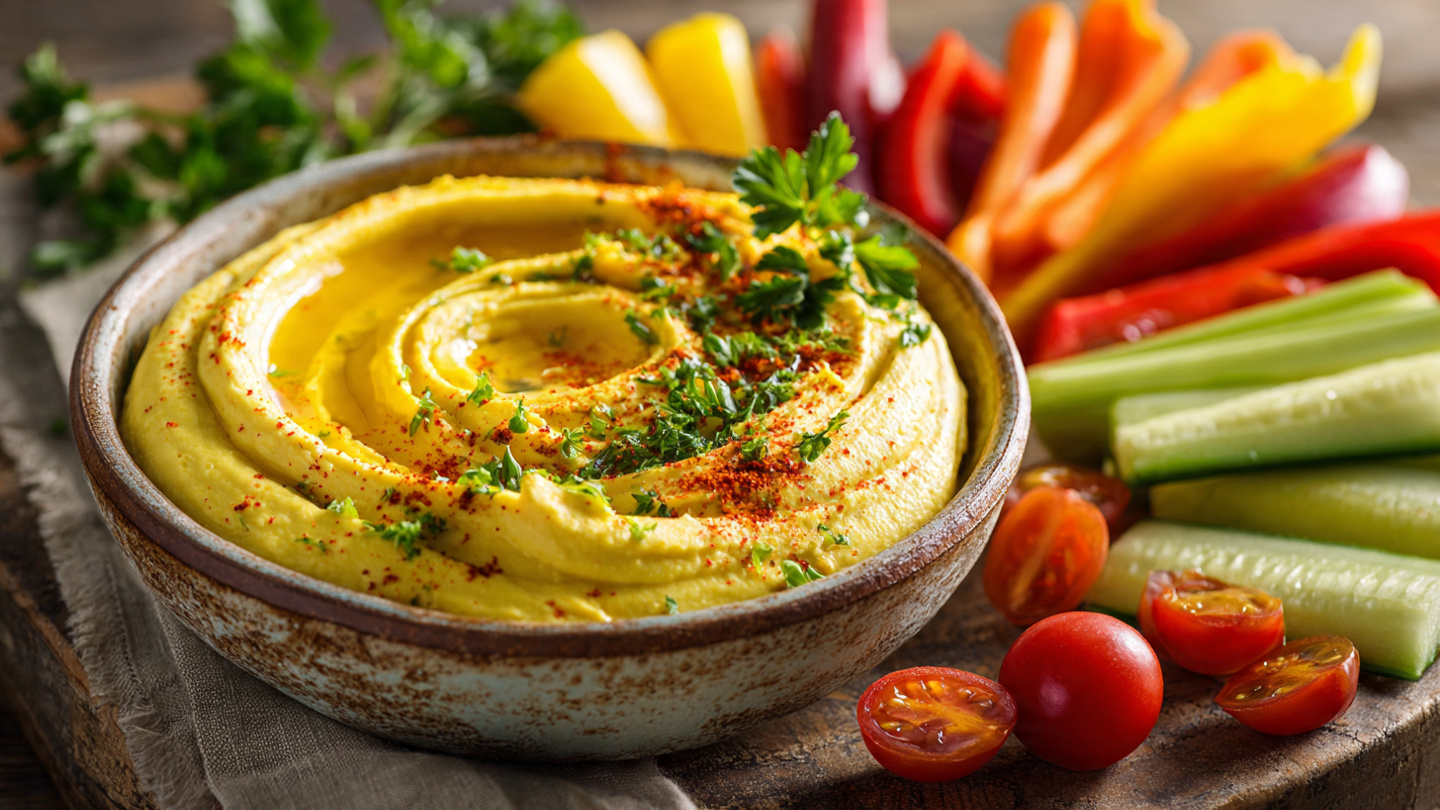
Zesty Lemon Hummus with Veggie Dippers
If you’re looking for a fresh, vibrant, and incredibly healthy snack that takes literally minutes to make, this Zesty Lemon Hummus with Veggie Dippers is about to become your new obsession! I’ve been making hummus from scratch for years, but it wasn’t until I added an extra punch of fresh lemon juice and zest that I truly fell in love with this recipe. What makes this version so special is the perfect balance between creamy, nutty chickpeas and that bright, tangy citrus flavor that wakes up your taste buds. This isn’t just any hummus—it’s silky smooth, bursting with flavor, and pairs beautifully with a rainbow of crisp, fresh vegetables. Whether you’re meal-prepping for the week, hosting a casual get-together, or need a nutritious afternoon snack, this recipe checks all the boxes. The best part? It’s naturally vegan, gluten-free, and packed with protein and fiber. Once you taste homemade hummus this fresh and zesty, you’ll never go back to store-bought versions again!
Overview of Recipe Content
This Zesty Lemon Hummus with Veggie Dippers is the perfect healthy snack or appetizer for any time of day, from mid-morning energy boosts to elegant party spreads. What makes this recipe truly wonderful is its incredible versatility—serve it as a quick lunch with pita bread, as a nutritious after-school snack for kids, or as a sophisticated starter at dinner parties. The flavor profile is bright and refreshing, with creamy chickpeas forming the base, tahini adding nutty depth, garlic providing a subtle kick, and fresh lemon bringing everything together with its zesty, citrusy punch. This recipe is perfect for health-conscious eaters, busy parents, vegans, anyone following a Mediterranean diet, or simply anyone who loves fresh, wholesome food. Paired with colorful veggie dippers, it’s not just delicious—it’s visually stunning and provides a satisfying crunch that complements the smooth, creamy hummus beautifully.
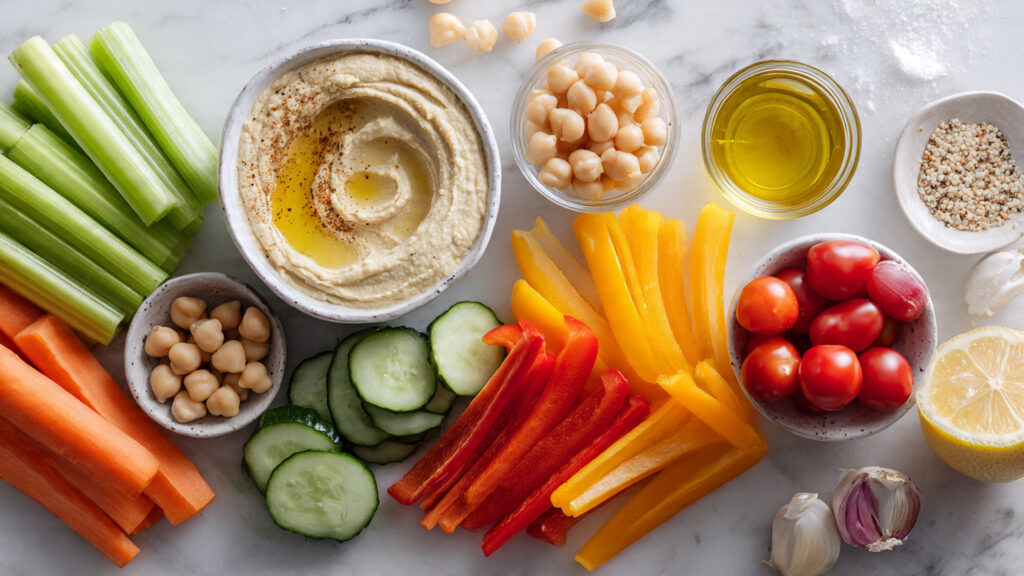
Ingredients
For the Zesty Lemon Hummus:
- 2 cans (15 oz each) chickpeas (garbanzo beans), drained and rinsed
- ⅓ cup tahini (sesame seed paste), well-stirred
- ¼ cup freshly squeezed lemon juice (about 2 medium lemons)
- 2 tablespoons extra virgin olive oil (plus more for drizzling)
- 2–3 garlic cloves, minced
- 1 teaspoon lemon zest (from 1 lemon)
- ½ teaspoon ground cumin
- ½ teaspoon sea salt (or to taste)
- ¼ teaspoon ground black pepper
- 3–5 tablespoons cold water (for desired consistency)
- Pinch of paprika or sumac (for garnish)
- Fresh parsley, chopped (for garnish, optional)
For the Veggie Dippers:
- 2 medium carrots, cut into sticks
- 1 large cucumber, cut into spears or rounds
- 2 bell peppers (red, yellow, or orange), cut into strips
- 1 cup cherry tomatoes
- 1 cup snap peas or sugar snap peas
- 1 cup celery sticks
- 1 cup radishes, halved or quartered
- 1 cup cauliflower or broccoli florets
- Warm pita bread, cut into triangles (optional)
Tools Needed
- Food processor or high-powered blender
- Measuring cups and spoons
- Citrus juicer or reamer
- Microplane or fine grater (for lemon zest)
- Sharp chef’s knife
- Cutting board
- Serving bowl or plate
- Rubber spatula
- Small bowl (for ice water bath, optional)
- Vegetable peeler (optional)
- Storage containers (for meal prep)
Suggested Substitutions and Additions
Tahini Alternatives: If you can’t find tahini or have a sesame allergy, use sunflower seed butter, almond butter, or cashew butter for a different but still delicious nutty flavor.
Canned vs. Dried Chickpeas: For the absolute creamiest hummus, cook dried chickpeas from scratch and peel them (yes, it’s time-consuming, but the texture is incredible). If using canned, reserve some of the aquafaba (chickpea liquid) instead of using water.
Roasted Garlic: For a milder, sweeter garlic flavor, roast the garlic cloves before adding them to the hummus. Simply wrap them in foil with a drizzle of olive oil and roast at 400°F for 25–30 minutes.
Spice Variations: Add ½ teaspoon of smoked paprika for a smoky note, a pinch of cayenne pepper for heat, or ½ teaspoon of za’atar for a Middle Eastern herb twist.
Extra Creamy Version: Add 1–2 tablespoons of Greek yogurt or a few ice cubes while blending for an ultra-smooth, airy texture.
Herb Additions: Blend in ¼ cup fresh herbs like cilantro, basil, or dill for an herbaceous variation.
Veggie Options: Swap any of the suggested veggies with jicama sticks, endive leaves, blanched asparagus, zucchini rounds, or baby corn. The key is variety in color and texture!
Oil-Free Version: Omit the olive oil and use extra aquafaba or water to achieve the desired consistency for a lower-fat option.
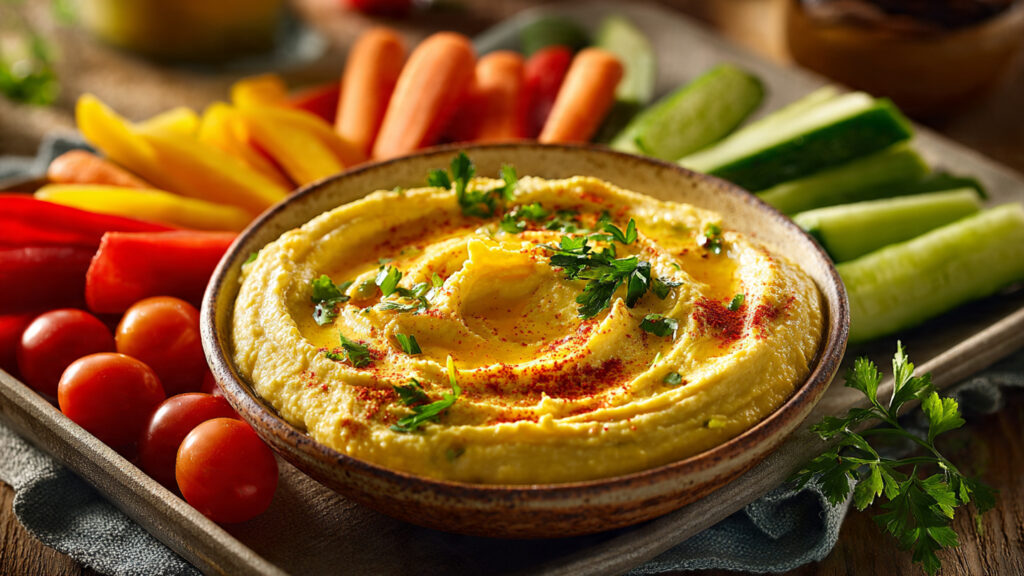
How to Make Zesty Lemon Hummus with Veggie Dippers
Step 1: Prepare Your Ingredients
Start by draining and thoroughly rinsing your canned chickpeas under cold running water—this removes excess sodium and any metallic taste from the can. For an extra-smooth hummus, you can take the time to slip the skins off the chickpeas by gently rubbing them between your fingers, though this is optional and time-consuming. Reserve about ¼ cup of the drained chickpeas for garnish if you’d like a traditional presentation. Zest one lemon using a microplane or fine grater, being careful to only get the yellow part and not the bitter white pith beneath. Then juice your lemons—you’ll need about ¼ cup of fresh juice, which typically comes from two medium lemons. Freshly squeezed lemon juice makes all the difference in this recipe, so avoid the bottled stuff if possible! Mince your garlic cloves finely, and make sure your tahini is well-stirred since it tends to separate in the jar with the oil rising to the top.
Step 2: Blend the Hummus Base
Add the tahini and lemon juice to your food processor first—this is a professional trick that creates a lighter, creamier texture! Process these two ingredients together for about 1 minute, scraping down the sides halfway through. You’ll notice the mixture becomes thick and creamy, almost whipped in appearance. This creates the foundation for incredibly smooth hummus. Now add the minced garlic, lemon zest, cumin, salt, and black pepper to the tahini-lemon mixture. Pulse several times to combine everything evenly. The food processor should be running smoothly, and you’ll start to smell that amazing garlicky, lemony aroma that makes hummus so irresistible.
Step 3: Add Chickpeas and Achieve Perfect Consistency
Add the drained chickpeas and olive oil to the food processor. Process for 1–2 minutes until the mixture is well combined but still slightly grainy. Now comes the key step for ultra-smooth hummus: with the food processor running, slowly drizzle in cold water one tablespoon at a time through the feed tube. Continue processing for 3–5 minutes total—yes, this seems like a long time, but it’s what transforms good hummus into great hummus! The mixture will gradually become lighter in color, silkier in texture, and will increase slightly in volume. Stop and scrape down the sides as needed. You’re looking for a smooth, creamy consistency that’s thick enough to hold its shape but soft enough to spread easily. Add more water if needed, one tablespoon at a time, until you reach your desired texture. Taste and adjust seasoning—you might want more lemon juice for brightness, more salt for depth, or more garlic for punch.
Step 4: Prepare the Veggie Dippers
While your hummus is processing (or after if you prefer), prepare your vegetable dippers for maximum freshness and crunch. Wash all vegetables thoroughly under cold running water and pat them dry with a clean kitchen towel. For carrots, peel them if desired and cut them into sticks about 3–4 inches long and ¼ inch thick—consistent sizing ensures even crunch and makes for beautiful presentation. Cut cucumbers into spears by quartering them lengthwise and removing the seedy center if it’s very watery, or slice them into thick rounds. Bell peppers should be seeded and cut into strips about ½ inch wide. Keep cherry tomatoes whole for easy popping into hummus. Snap peas can be left whole if they’re young and tender. Celery should be cut into 3–4 inch sticks, and you can remove the strings from the outer stalks for a more pleasant texture. For cauliflower and broccoli, cut into bite-sized florets and consider blanching them briefly in boiling water for 1 minute, then shocking in ice water if you prefer slightly softened veggies over completely raw.
Step 5: Arrange and Serve
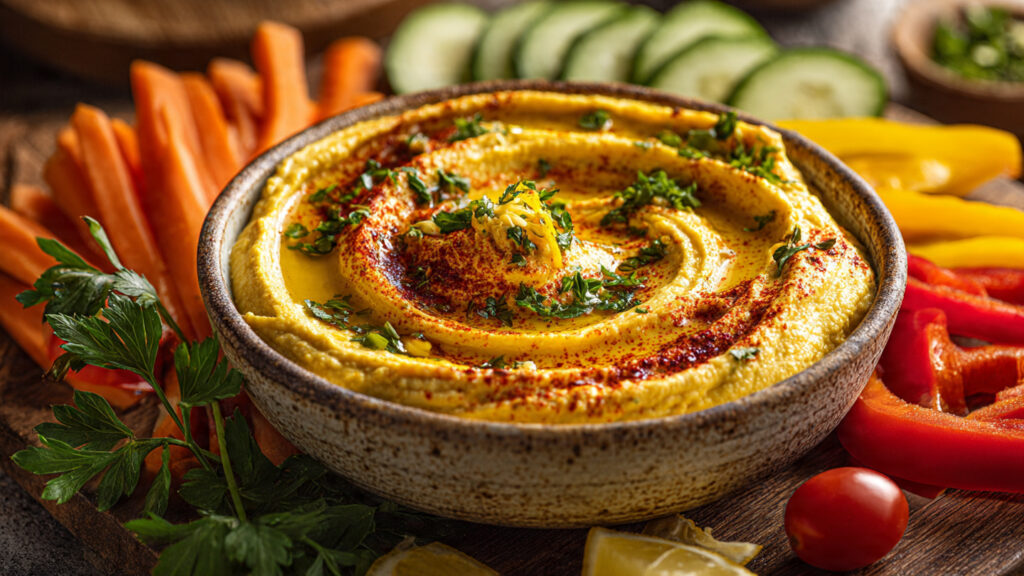
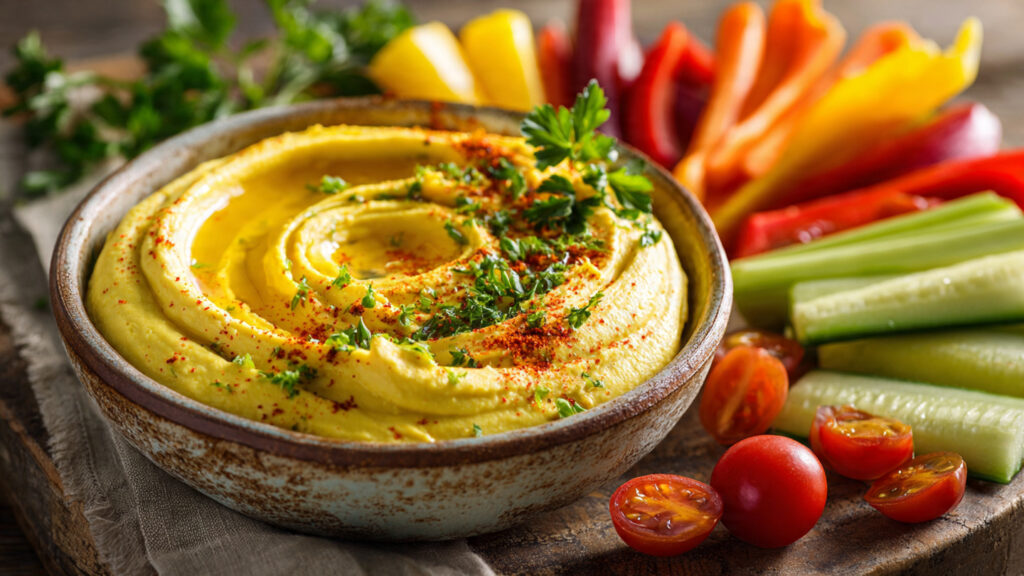
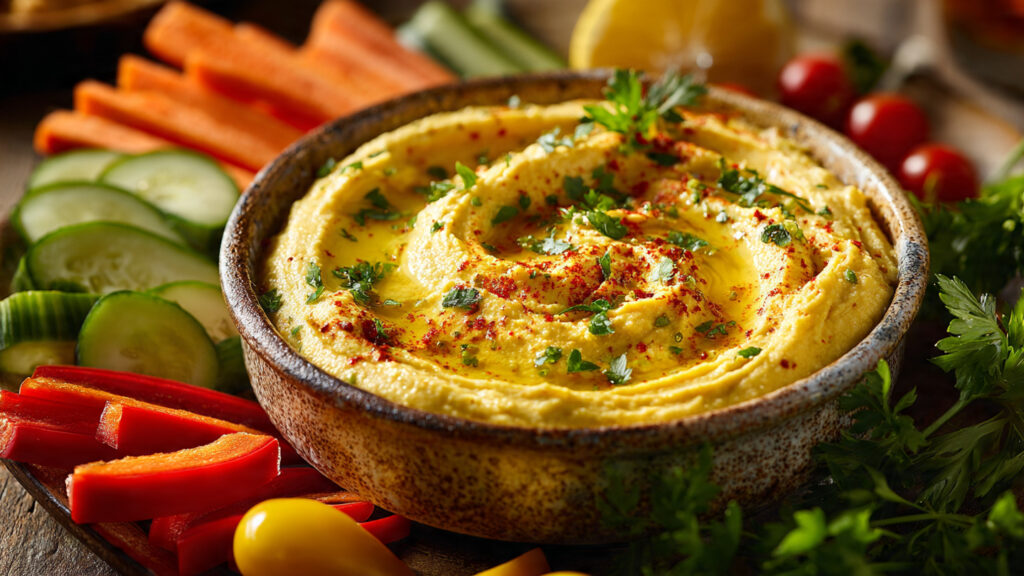
Transfer your beautiful, creamy hummus to a shallow serving bowl or plate—traditional presentation uses a wide, shallow dish rather than a deep bowl, which allows for the classic swoosh pattern. Using the back of a spoon, create a shallow well or decorative swirl in the center of the hummus by moving the spoon in a circular motion from the center outward. Drizzle the well with high-quality extra virgin olive oil—this isn’t just for looks; it adds richness and helps keep the hummus fresh. Sprinkle with a pinch of paprika or sumac for color and a subtle flavor boost. Add your reserved whole chickpeas in the center if using, and garnish with fresh chopped parsley for a pop of green. Arrange your colorful veggie dippers around the hummus bowl on a large platter, grouping similar colors together for maximum visual impact—think of it as edible art! You can also serve the hummus in individual small bowls or ramekins with personal servings of veggies for a party or gathering.
Step 6: Storage and Make-Ahead Tips
If you’re not serving immediately, transfer the hummus to an airtight container and smooth the top surface. Pour a thin layer of olive oil over the surface—this creates a seal that prevents oxidation and keeps the hummus fresh. Cover tightly and refrigerate until ready to serve, up to 5–7 days. Cut your veggie dippers and store them in containers lined with damp paper towels or in containers with a little water at the bottom to keep them crisp. Alternatively, you can store cut veggies in zip-top bags with all the air pressed out. For the best texture and flavor, bring the hummus to room temperature about 30 minutes before serving, and give it a good stir to recombine. You may need to add a tablespoon or two of water and a fresh drizzle of olive oil to refresh the consistency after refrigeration.
What to Serve with It
Warm Pita Bread or Flatbread: The traditional accompaniment to hummus is warm, fluffy pita bread cut into triangles. Toast them lightly in the oven with a brush of olive oil and a sprinkle of za’atar for extra flavor. Naan, lavash, or any Mediterranean flatbread works beautifully as well.
Crispy Pita Chips: Make your own by cutting pita into triangles, tossing with olive oil, salt, and spices, then baking at 375°F for 10–12 minutes until golden and crispy. These add a satisfying crunch and are perfect for scooping generous amounts of hummus.
As Part of a Mezze Platter: Serve your lemon hummus as part of a larger Mediterranean spread alongside baba ganoush, tabbouleh, stuffed grape leaves, olives, feta cheese, and tzatziki for a complete appetizer spread that’s perfect for entertaining.
Grain Bowls or Salads: Use the hummus as a creamy dressing base for Buddha bowls, quinoa salads, or falafel wraps. Thin it with a bit of water or lemon juice to drizzle over roasted vegetables or grain bowls.
Tips for Making It Perfect
The Ice Water Trick: For the absolute creamiest hummus, add 2–3 ice cubes instead of regular water during blending. The cold temperature helps emulsify the mixture and creates an incredibly smooth, almost whipped texture.
Don’t Rush the Processing Time: The difference between okay hummus and restaurant-quality hummus is processing time. Let that food processor run for a full 3–5 minutes after adding the chickpeas. Your patience will be rewarded with silky-smooth results.
Peel Your Chickpeas (If You’re Ambitious): Yes, it’s tedious, but removing the skins from your chickpeas creates an almost impossibly smooth texture. If you’re making hummus for a special occasion, it’s worth the 15 minutes it takes. Simply rub the chickpeas between your hands or a kitchen towel and the skins will slip right off.
Quality Tahini Matters: Use fresh, high-quality tahini from a Middle Eastern market if possible. Check the ingredients—it should only contain sesame seeds, sometimes with a tiny bit of salt. Avoid tahini that’s been sitting in your pantry for years or tastes bitter.
Fresh Lemon is Non-Negotiable: Bottled lemon juice simply cannot compare to the bright, fresh flavor of real lemons. The zest adds aromatic oils that bring complexity to the flavor profile.
Customize the Garlic: Garlic flavor intensifies over time in hummus, so if you’re making it ahead and you’re sensitive to garlic, start with just one clove and add more to taste. Conversely, if you’re a garlic lover, feel free to add an extra clove or two!
Storage Instructions
Refrigeration: Store your zesty lemon hummus in an airtight container in the refrigerator for up to 7 days. Make sure to pour a thin layer of olive oil over the surface before sealing to prevent oxidation and drying out. The hummus may thicken in the fridge, so stir in a tablespoon or two of cold water before serving to restore its creamy consistency.
Veggie Dipper Storage: Cut vegetables stay freshest when stored properly in the refrigerator. Keep them in airtight containers lined with damp paper towels, or store in containers with a small amount of water at the bottom. Carrots, celery, and cucumber can be stored in water like a vase to keep them extra crisp. Properly stored, cut veggies will stay fresh for 3–5 days.
Freezing Hummus: Yes, you can freeze hummus! Portion it into smaller freezer-safe containers, leaving about ½ inch of headspace for expansion. It will keep frozen for up to 4 months. Thaw overnight in the refrigerator, then stir vigorously and add a bit of olive oil and water to restore the creamy texture. The consistency may be slightly different from fresh, but the flavor remains excellent.
Make-Ahead Strategy: Hummus actually tastes better after sitting for a few hours or overnight, as the flavors meld together. Make it 1–2 days ahead of when you need it, and prepare your veggie dippers the night before your event. This makes entertaining stress-free!
General Information
Hummus has been a staple food in the Middle East for thousands of years, with its origins debated among countries including Lebanon, Palestine, Israel, Egypt, and Syria—all of which claim it as their own national dish. The word “hummus” literally means “chickpea” in Arabic, and the full name is “hummus bi tahina,” meaning chickpeas with tahini. Archaeological evidence suggests that chickpeas were cultivated in the Mediterranean and Middle Eastern regions as early as 7,500 years ago, making hummus one of the oldest prepared foods still consumed today. Traditionally, hummus was made by grinding chickpeas by hand in a mortar and pestle, a laborious process that modern food processors have thankfully simplified! Interestingly, the creamy texture we associate with hummus today is actually a relatively modern development—traditional hummus was often coarser and chunkier. The practice of serving hummus with fresh vegetables is particularly popular in Levantine cuisine, where meals are communal and feature shared mezze platters. Nutritionally, hummus is a powerhouse—it’s rich in plant-based protein, fiber, healthy fats from tahini, and various vitamins and minerals including iron, folate, and B vitamins. The addition of lemon not only enhances flavor but also increases the bioavailability of iron from the chickpeas, making this dish as smart nutritionally as it is delicious!
Frequently Asked Questions (FAQ)
Why is my hummus grainy instead of smooth?
The most common reasons are not processing long enough or not adding enough liquid. Make sure you’re running your food processor for a full 3–5 minutes after adding the chickpeas, and add water gradually until you achieve a silky consistency. Using very fresh, high-quality tahini also makes a significant difference. If your hummus is still grainy, try the chickpea-peeling method or blend in a few ice cubes for a smoother texture.
Can I make hummus without tahini?
While tahini is traditional and provides that signature nutty flavor and creamy texture, you can substitute it with other nut or seed butters like sunflower seed butter, cashew butter, or almond butter. The flavor profile will be different, but you’ll still get a creamy, delicious result. You can also increase the olive oil and add a bit of Greek yogurt for creaminess if you’re not keeping it vegan.
How do I prevent my hummus from being too thick?
Hummus thickens as it sits, especially when refrigerated, due to the starch in the chickpeas absorbing moisture. Always add water gradually while blending until you reach a consistency slightly thinner than your target, knowing it will firm up. When serving refrigerated hummus, stir in a tablespoon or two of cold water or aquafaba to loosen it back up. Room temperature hummus is naturally softer than cold.
Can I use dried chickpeas instead of canned?
Absolutely! In fact, many hummus purists swear by cooking dried chickpeas from scratch. Soak 1 cup of dried chickpeas overnight, then simmer with ½ teaspoon of baking soda for 45–60 minutes until very tender—even slightly overcooked is fine for hummus. This method gives you more control over texture and reduces the metallic taste sometimes present in canned varieties. Plus, you can save the cooking liquid (aquafaba) to use in the hummus for extra creaminess.
Why does my hummus taste bitter?
Bitterness in hummus usually comes from one of three sources: old or rancid tahini (tahini should taste nutty and mild, not bitter), too much raw garlic (which can be harsh), or burned lemon zest (make sure you’re only zesting the yellow part, not the white pith). Check your tahini’s expiration date and give it a taste before adding it. If your garlic is very fresh and pungent, consider starting with less and adding more to taste.
What vegetables work best for dipping?
The best veggie dippers are those that are sturdy enough to scoop hummus without breaking. Carrot sticks, cucumber spears, bell pepper strips, celery, and snap peas are all excellent choices. Blanched vegetables like cauliflower and broccoli also work well. For variety in texture, include some crispy options (carrots, celery) and some with high water content (cucumbers, tomatoes). Baby vegetables like cherry tomatoes, baby carrots, and radishes are perfect for parties because they’re bite-sized and don’t require cutting.
Conclusion
I truly hope this Zesty Lemon Hummus with Veggie Dippers becomes a regular part of your healthy snacking routine! This recipe has transformed the way I think about quick, nutritious food—it’s proof that healthy eating doesn’t have to be complicated or time-consuming. The bright, fresh flavors and creamy texture make it so much better than anything you can buy at the store, and once you realize how easy it is to make, you’ll wonder why you ever bought the pre-made stuff. If you give this recipe a try, I’d absolutely love to hear from you in the comments below! Let me know what vegetables you paired it with, whether you customized the flavors, or if you have any questions. Please rate this recipe if you enjoyed it—your feedback helps other readers discover great recipes. Don’t forget to snap a photo of your beautiful hummus creation and share it on Instagram or Pinterest! Tag me @YourFoodBlog so I can see your colorful veggie platters and give you a shoutout. Here’s to fresh, healthy, delicious snacking that actually makes you feel good! Happy blending!
Nutritional Information (per serving)
Based on 8 servings (hummus only, approximately ⅓ cup per serving)
| Nutrient | Amount |
|---|---|
| Calories | 165 kcal |
| Total Fat | 9g |
| Saturated Fat | 1g |
| Cholesterol | 0mg |
| Sodium | 180mg |
| Total Carbohydrates | 17g |
| Dietary Fiber | 5g |
| Sugars | 3g |
| Protein | 6g |
| Vitamin C | 8mg |
| Calcium | 55mg |
| Iron | 2mg |
| Potassium | 210mg |
Note: Nutritional values are approximate and calculated for hummus only. Veggie dippers add minimal calories (approximately 20–40 calories per serving) but provide additional fiber, vitamins, and minerals. Values may vary based on specific ingredients and portion sizes used.