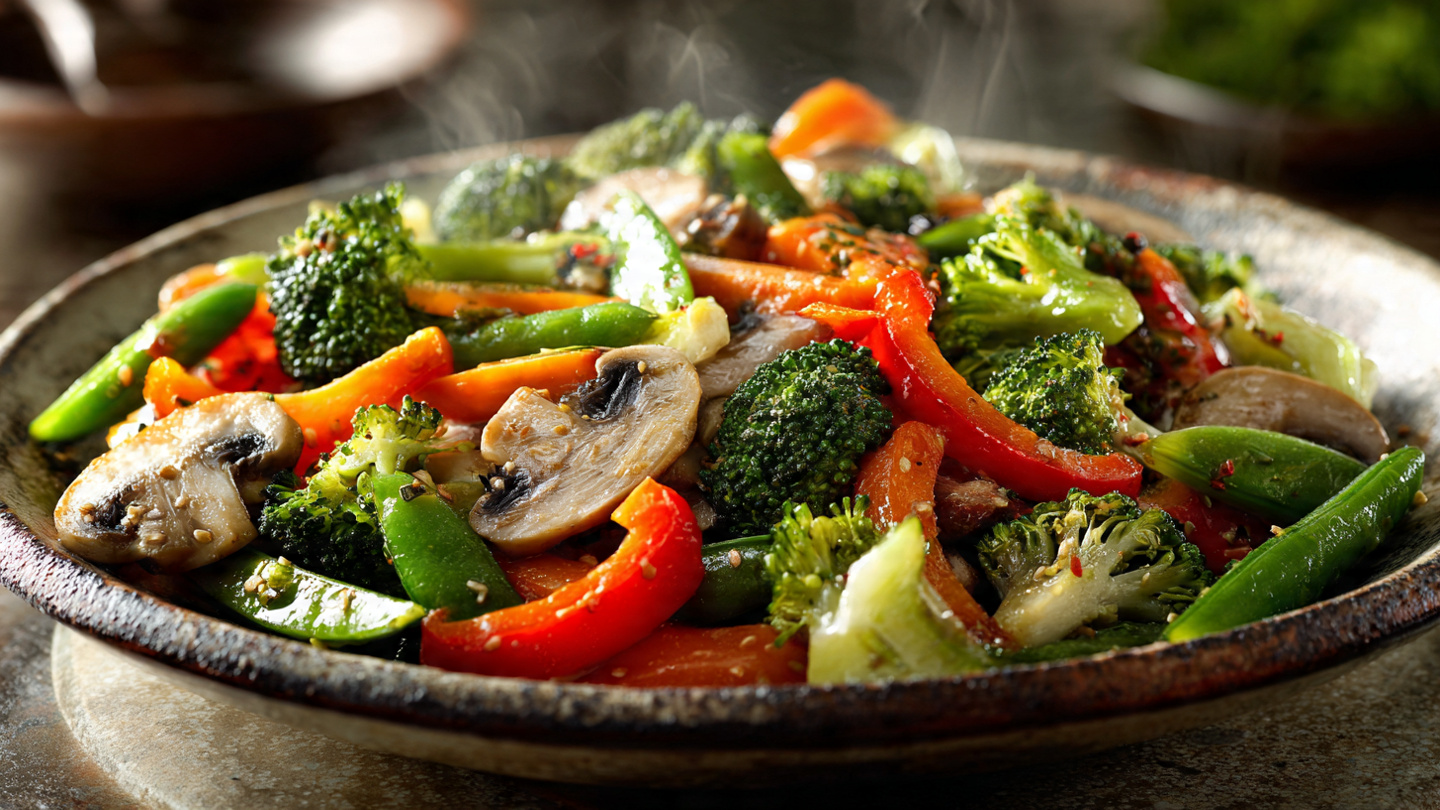
Wholesome Gluten-Free Veggie Stir Fry
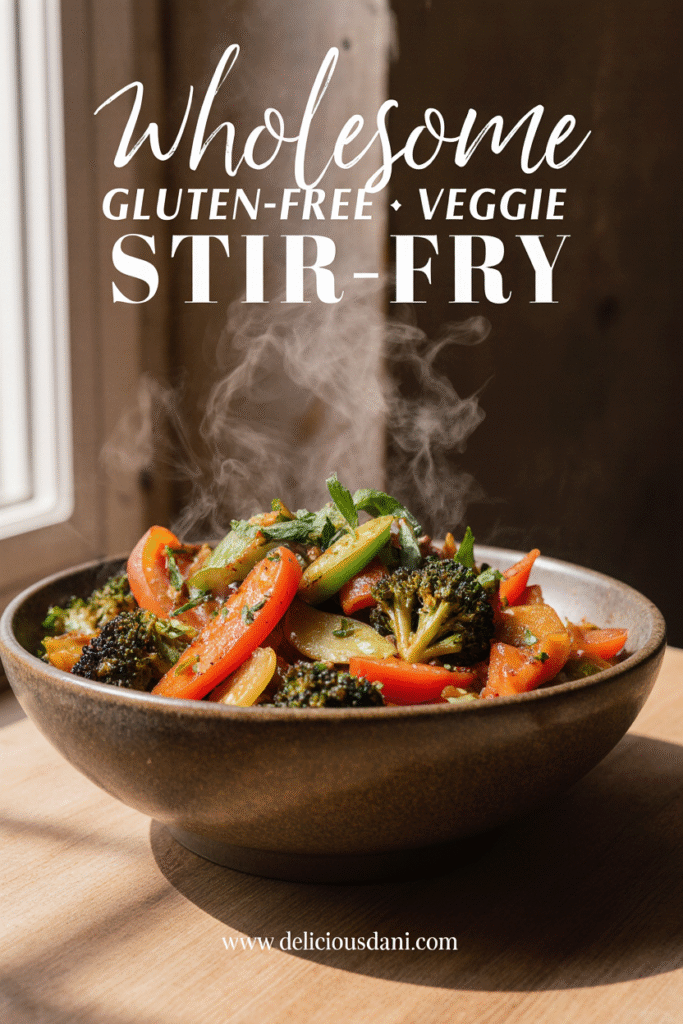
Get ready to discover a vibrant, nutritious, and absolutely delicious Wholesome Gluten-Free Veggie Stir Fry – a rainbow of crisp-tender vegetables tossed in a savory-sweet sauce that’s naturally gluten-free, packed with nutrition, incredibly versatile, and comes together in less than 30 minutes for the ultimate healthy weeknight dinner! I created this recipe during my quest to eat more vegetables without feeling like I was sacrificing flavor or satisfaction, and after countless experiments with different vegetable combinations and sauce ratios, I finally achieved perfection: a stir fry so colorful, flavorful, and satisfying that even my veggie-skeptical family members clean their plates and ask for seconds. What makes this stir fry absolutely extraordinary is how it combines the best elements of Asian cuisine – that signature “wok hei” (breath of the wok) flavor, the perfect balance of savory, sweet, and umami, and the satisfying contrast of textures from crisp vegetables and tender protein – while being completely gluten-free and easily adaptable to whatever vegetables you have on hand. This stir fry has become my weeknight dinner hero, my meal prep champion, my “clean out the fridge” solution, my way to get my family to eat more vegetables, and proof that healthy eating doesn’t have to be boring or bland! Whether you’re gluten-free by choice or necessity, love vegetable-forward meals, need quick healthy dinners, want to meal prep for the week, or just crave the bold flavors of Asian cuisine, this veggie stir fry is about to revolutionize your cooking routine!
Overview of Recipe Content
Wholesome Gluten-Free Veggie Stir Fry is perfect for busy weeknight dinners (30 minutes or less!), gluten-free meal planning, meal prep for healthy lunches, vegetarian and vegan main dishes, using up vegetables from the fridge, clean eating and whole food diets, budget-friendly healthy eating, or anytime you want nutritious, flavorful food fast. It’s a great recipe because it’s genuinely quick and easy (ready in 30 minutes), naturally gluten-free with tamari or coconut aminos, packed with vegetables and nutrition, infinitely customizable to preferences and what you have, works as a complete meal or side dish, is naturally low-calorie and nutrient-dense, and satisfies with bold, authentic flavors. The flavor profile is Asian-inspired perfection: savory umami from tamari or coconut aminos, subtle sweetness from honey or maple syrup, aromatic ginger and garlic throughout, nutty toasted sesame notes, bright acidity from rice vinegar or lime, and optional heat from chili sauce or red pepper flakes. This recipe is perfect for gluten-free eaters and celiac-safe cooking, vegetable lovers and health-conscious cooks, busy families and meal preppers, Asian cuisine enthusiasts, people managing dietary restrictions, and anyone wanting quick, nutritious, flavorful dinners. It’s naturally gluten-free, easily made vegan, and always delicious!
Ingredients
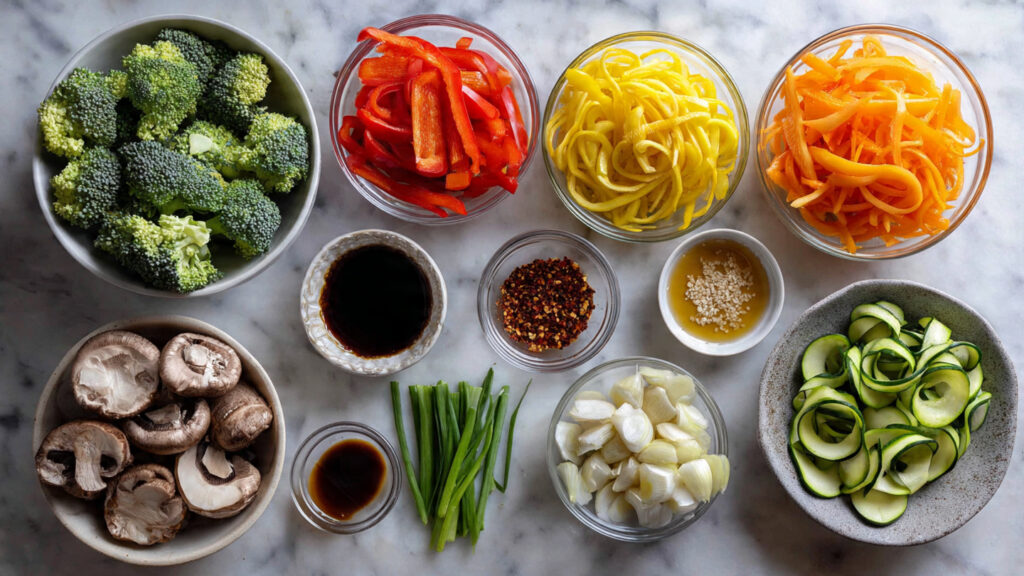
For the Stir Fry Sauce (Gluten-Free):
- ¼ cup (60ml) gluten-free tamari or coconut aminos
- 2 tablespoons rice vinegar or lime juice
- 2 tablespoons honey or maple syrup
- 1 tablespoon sesame oil (toasted)
- 1 tablespoon cornstarch or arrowroot powder
- 2 cloves garlic, minced
- 1 tablespoon fresh ginger, minced
- Optional: 1 teaspoon chili garlic sauce or sriracha for heat
For the Vegetable Stir Fry:
- 2-3 tablespoons neutral oil (vegetable, avocado, or peanut oil)
- 1 large bell pepper (any color), sliced into strips
- 1 medium broccoli crown, cut into small florets (about 2 cups)
- 1 medium carrot, sliced on the diagonal or julienned
- 1 cup (100g) snap peas or snow peas, trimmed
- 1 small red onion, sliced
- 1 cup (70g) mushrooms, sliced (shiitake, cremini, or button)
- 2 cups (140g) cabbage or bok choy, chopped
- Optional: 1 cup (150g) edamame, baby corn, water chestnuts, or bamboo shoots
For Serving:
- Cooked rice (white, brown, jasmine, or cauliflower rice)
- Sesame seeds for garnish
- Sliced green onions
- Fresh cilantro (optional)
- Lime wedges
- Optional: crushed peanuts or cashews
Optional Protein Additions:
- Tofu (firm or extra-firm, cubed and pressed)
- Tempeh (cubed)
- Chicken breast or thighs (sliced thin)
- Shrimp (peeled and deveined)
- Beef or pork (sliced thin against the grain)
- Eggs (scrambled or fried)
Tools Needed
- Large wok or large skillet (12-14 inch)
- Cutting board and sharp knife
- Measuring cups and spoons
- Small bowl (for mixing sauce)
- Whisk or fork
- Spatula or wooden spoon
- Plates for prepped vegetables
- Rice cooker or pot (for cooking rice)
Suggested Substitutions and Additions
Gluten-Free Soy Sauce Alternatives:
- Tamari: Traditional, wheat-free (recommended – check label for certified GF)
- Coconut aminos: Soy-free, slightly sweeter, lower sodium
- Liquid aminos: Bragg’s brand, gluten-free alternative
- Fish sauce: For different umami (not vegetarian)
- GF soy sauce: Some brands make certified gluten-free versions
- CRITICAL: Regular soy sauce contains wheat – not gluten-free!
Vegetable Combinations:
- Rainbow mix: As written with variety of colors
- Cruciferous: Broccoli, cauliflower, Brussels sprouts, cabbage
- Asian greens: Bok choy, Chinese broccoli (gai lan), yu choy
- Protein-rich: Edamame, snap peas, broccoli
- Quick-cooking: Bell peppers, snap peas, mushrooms, spinach
- Root vegetables: Carrots, parsnips, sweet potato (add first, need more time)
- Leafy greens: Spinach, kale, Swiss chard (add last)
- Frozen mix: Use frozen stir fry blend for convenience
Sauce Variations:
- Classic: As written with tamari, honey, sesame
- Spicy: Add chili garlic sauce, sriracha, or red pepper flakes
- Sweet and sour: Increase honey, add pineapple juice
- Teriyaki-style: Add extra honey, ginger
- Ginger-heavy: Double or triple fresh ginger
- Citrus: Use lime or orange juice instead of vinegar
- Thai-inspired: Add lemongrass, fish sauce, lime
- Korean-inspired: Add gochujang (check GF), sesame
Sweetener Options:
- Honey: Floral, traditional (not vegan)
- Maple syrup: Vegan, distinct flavor
- Coconut sugar: Dissolved in liquid first
- Date paste: Whole food sweetener
- Brown sugar: Quick-dissolving (check vegan)
- Agave nectar: Neutral, vegan
- Skip it: For savory-only version
Protein Additions:
- Tofu: Press well, cube, pan-fry until golden before adding
- Tempeh: Cube, steam first to remove bitterness, then pan-fry
- Chicken: Slice thin, cook first, remove, add back at end
- Shrimp: Add last, cook just 2-3 minutes until pink
- Beef: Slice thin against grain, cook first over high heat
- Eggs: Scramble separately, fold in at end
- Edamame: Add with other vegetables (already cooked)
Noodle/Rice Alternatives:
- White rice: Classic, quick-cooking
- Brown rice: Healthier, nuttier (takes longer)
- Jasmine or basmati: Fragrant, delicious
- Cauliflower rice: Low-carb, grain-free
- Rice noodles: Gluten-free, quick (vermicelli, pad thai noodles)
- Quinoa: Protein-rich, gluten-free grain
- Zucchini noodles: Low-carb, fresh
- No starch: Serve as vegetable dish only
Flavor Enhancements:
- Add 1 teaspoon oyster sauce (check GF) for umami
- Include Chinese five-spice powder (¼ teaspoon)
- Add lemongrass or Thai basil for Thai flavor
- Include hoisin sauce (check GF) for sweetness
- Add Szechuan peppercorns for numbing heat
- Include preserved black beans for funky depth
- Add orange or lemon zest for brightness
Garnish and Topping Ideas:
- Sesame seeds: White, black, or mixed (toasted)
- Green onions: Sliced on diagonal
- Fresh herbs: Cilantro, Thai basil, mint
- Nuts: Peanuts, cashews, almonds (toasted)
- Crispy elements: Fried shallots, fried garlic
- Lime wedges: Squeeze fresh before eating
- Chili oil: Drizzle for heat and flavor
- Nori strips: Shredded seaweed for umami
Dietary Modifications:
- Vegan: Use maple syrup, skip fish sauce, use coconut aminos
- Paleo: Use coconut aminos, honey, include protein
- Keto: Serve with cauliflower rice, increase protein/fat
- Low-sodium: Use low-sodium tamari, reduce amount
- Low-carb: Omit rice, use cauliflower rice or zucchini noodles
- Whole30: Use coconut aminos, date paste, compliant ingredients
- AIP: Avoid nightshades (peppers), soy, use coconut aminos
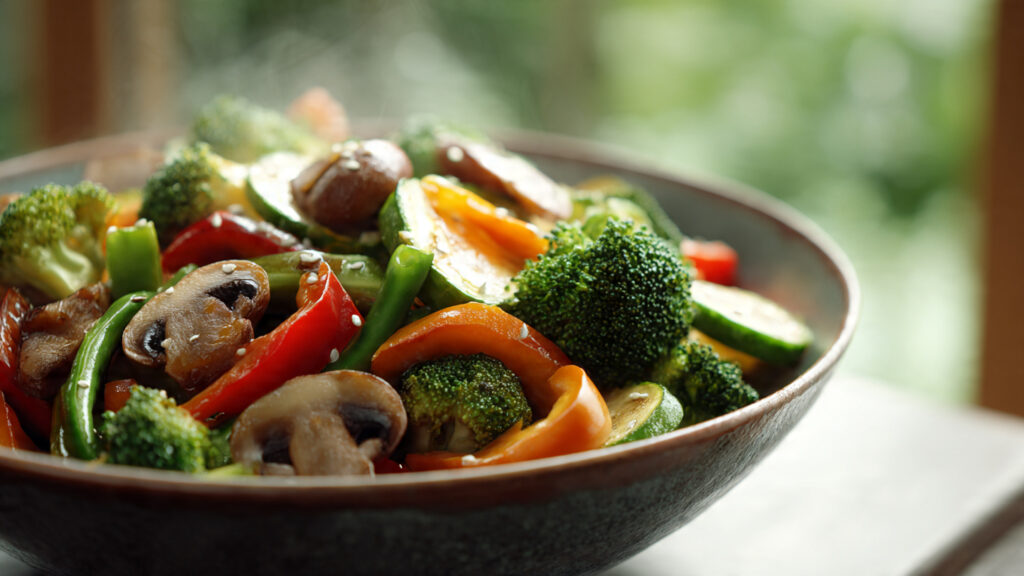
How to Make Wholesome Gluten-Free Veggie Stir Fry
Step 1: Prepare All Ingredients (Mise en Place)
This is the most important step in stir frying! Stir frying happens FAST over high heat, so everything must be prepped and ready before you start cooking. This is called “mise en place” (everything in its place).
Prepare the sauce: In a small bowl, whisk together the tamari (or coconut aminos), rice vinegar, honey, sesame oil, cornstarch, minced garlic, minced ginger, and optional chili sauce if using. Whisk until the cornstarch is dissolved and the sauce is smooth. Set aside within arm’s reach of the stove.
Prepare the vegetables: Wash and cut all vegetables into uniform, bite-sized pieces. Slice bell peppers into strips, cut broccoli into small florets, slice carrots on the diagonal or julienne them, trim snap peas, slice onion, slice mushrooms, and chop cabbage or bok choy. Arrange vegetables on plates or in bowls, grouped by cooking time (harder vegetables separate from softer ones).
Group vegetables by cooking time:
- Longest cooking: Broccoli, carrots, cauliflower (if using)
- Medium cooking: Bell peppers, onions, mushrooms
- Quick cooking: Snap peas, cabbage, bok choy, leafy greens
If adding protein like tofu or chicken, prepare it now: cube tofu and press to remove moisture, or slice chicken thinly and season.
Pro tip: This prep takes 15-20 minutes but makes actual cooking take only 5-7 minutes! Don’t skip prep or you’ll be frantically cutting vegetables while food burns in the wok.
Step 2: Cook Rice or Grain Base
Start cooking your rice or grain base now so it’s ready when the stir fry is done. Follow package directions for white rice, brown rice, jasmine rice, or quinoa. If using cauliflower rice, you’ll cook it quickly later.
Rice typically takes 15-20 minutes for white rice, 40-45 minutes for brown rice. Time it so rice finishes around the same time as your stir fry.
Alternative: Prep rice ahead of time or use leftover rice (actually ideal for stir fries – day-old rice has less moisture and fries better!).
Step 3: Heat Wok and Cook Protein (If Using)
Heat your wok or large skillet over high heat until very hot – this is crucial! A properly heated wok creates that signature “wok hei” flavor (breath of the wok) and prevents food from sticking or steaming instead of searing.
Add 1 tablespoon oil and swirl to coat. Test the heat by adding a drop of water – it should evaporate instantly with a sizzle.
If adding protein like tofu, chicken, or shrimp, cook it first: Add protein in a single layer, let it sear without moving for 1-2 minutes, then stir fry until cooked through (tofu golden and crispy, chicken cooked through, shrimp pink). Remove protein to a plate and set aside. You’ll add it back at the end.
Important: Don’t overcrowd the wok! Cook protein in batches if necessary. Overcrowding causes steaming instead of searing, creating soggy, pale food instead of golden, caramelized deliciousness.
Step 4: Stir Fry Vegetables in Stages
Now for the actual stir frying! Work in stages based on cooking time, adding hardest vegetables first.
First stage (longest-cooking vegetables): Add another 1 tablespoon oil to the hot wok. Add broccoli and carrots. Stir fry for 2-3 minutes, tossing constantly with a spatula or shaking the wok. They should start to become tender but still be crisp. If vegetables are browning too quickly or sticking, add 1-2 tablespoons water (it will steam briefly and evaporate).
Second stage (medium-cooking vegetables): Add bell peppers, onions, and mushrooms. Stir fry for another 2-3 minutes, tossing constantly. Everything should be becoming tender but still have a bit of crunch.
Third stage (quick-cooking vegetables): Add snap peas, cabbage or bok choy. Stir fry for 1-2 minutes. They should be bright, crisp-tender, and heated through.
Stir fry technique: Keep food moving constantly! Use a scooping and tossing motion, or shake the wok if you’re comfortable. High heat + constant movement = perfect stir fry. Food should be sizzling and searing, not sitting and steaming.
If vegetables start to stick or burn, reduce heat slightly or add a splash of water. But don’t add too much liquid or you’ll lose that seared, caramelized flavor!
Step 5: Add Sauce and Finish
Once all vegetables are crisp-tender, give the sauce a quick whisk (the cornstarch settles) and pour it over the vegetables. Toss everything together constantly for 1-2 minutes until the sauce thickens, becomes glossy, and coats all the vegetables evenly.
The cornstarch in the sauce will thicken quickly, creating that characteristic glossy, clingy sauce that coats every piece of vegetable. Keep tossing to ensure even coating!
If you cooked protein earlier, add it back now along with the sauce. Toss everything together so the protein reheats and gets coated in sauce.
Taste and adjust: Need more saltiness? Add a splash more tamari. Want more sweetness? Add a drizzle of honey. Need acid? Squeeze lime juice. Want heat? Add chili sauce. Adjust to your preference!
Remove from heat immediately once sauce has thickened and everything is coated. Don’t overcook or vegetables will become mushy and lose their crisp texture.
Step 6: Serve and Garnish
Serve the hot stir fry immediately over cooked rice, quinoa, cauliflower rice, or rice noodles. Stir fry is best enjoyed fresh and hot – the vegetables lose their crisp texture if they sit too long.
Garnish generously with: toasted sesame seeds, sliced green onions, fresh cilantro if desired, crushed peanuts or cashews for crunch, and lime wedges on the side. Provide extra chili sauce or sriracha for those who want more heat.
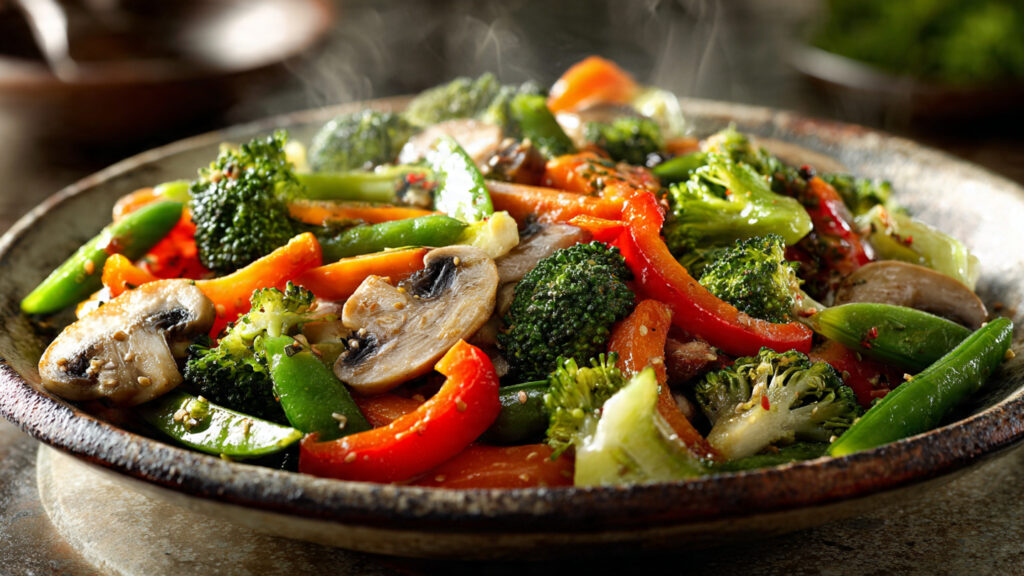
Enjoy immediately while hot! The contrast of crisp-tender vegetables, savory-sweet sauce, fluffy rice, and crunchy garnishes creates a complete, satisfying, nutritious meal that’s ready in under 30 minutes.
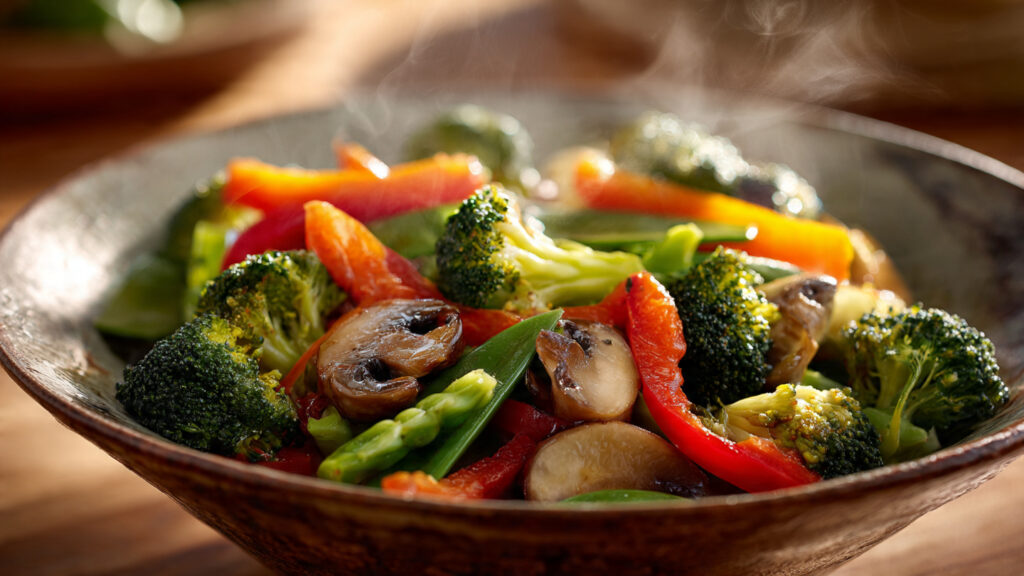
What to Serve with It
Wholesome Gluten-Free Veggie Stir Fry is substantial and can be a complete meal, especially with added protein, but traditional Asian sides complement it beautifully. For rice and grain options (if not serving stir fry over rice), include: steamed white or brown rice (classic, neutral), fried rice (egg fried rice, vegetable fried rice), coconut rice (cooked in coconut milk, slightly sweet), sticky rice (glutinous rice, traditional Asian), quinoa (protein-rich, gluten-free), or cauliflower rice (low-carb, paleo-friendly).
Noodle alternatives: rice noodles (pad thai style, vermicelli), rice paper rolls (fresh spring rolls with vegetables), cold sesame noodles (chilled noodle salad), zucchini noodles (low-carb, fresh), or sweet potato noodles (Korean glass noodles – check GF).
Protein sides (if stir fry is vegetable-only): grilled or baked tofu (marinated), edamame (steamed with sea salt), tempeh (pan-fried), hard-boiled eggs (marinated in soy sauce), grilled chicken satay (check GF sauce), baked fish (teriyaki-style, GF), or egg drop soup (warm, comforting).
Asian-inspired side dishes: miso soup (check GF miso paste), hot and sour soup (tangy, spicy), cucumber salad (rice vinegar, sesame dressing), seaweed salad (wakame with sesame), kimchi (fermented, spicy, probiotic), pickled vegetables (quick pickles, tsukemono), or Asian slaw (cabbage, ginger dressing).
Dumplings and small bites (check for GF options): potstickers (use GF wrappers if making homemade), spring rolls (rice paper, fresh vegetables), lettuce wraps (ground protein in lettuce cups), shrimp tempura (use GF flour), or vegetable pakoras (Indian-style fritters, use chickpea flour).
Beverage pairings: green tea (hot or iced, traditional), jasmine tea (fragrant, lovely), sparkling water with lime (refreshing), coconut water (hydrating, tropical), sake (Japanese rice wine), Asian beer (light lagers), or ginger lemonade (spicy, sweet).
Appetizers for full meal: spring rolls with peanut sauce, crispy tofu bites with chili sauce, cucumber rounds with sesame, vegetable tempura (GF batter), or edamame hummus with rice crackers.
Dessert options: fresh fruit (mango, lychee, dragon fruit), mochi (check GF), coconut rice pudding, green tea ice cream, fortune cookies (check GF), or tropical fruit salad.
Complete Asian feast: Serve stir fry with miso soup, cucumber salad, edamame, rice, and green tea for a full, balanced, restaurant-style meal at home.
For kids: Pair with plain white rice, edamame, mandarin oranges, fortune cookies, keeping sides simple and familiar.
Tips for Making It Perfect
- Prep everything before you start cooking – no exceptions! Stir frying happens extremely fast over high heat (5-7 minutes total cooking time). You don’t have time to chop vegetables, measure sauce, or search for ingredients while cooking. Everything must be washed, cut, measured, and within arm’s reach before you turn on the stove. This “mise en place” approach is THE difference between successful stir fry and disaster!
- Use high heat and keep food moving constantly: Stir frying requires HIGH heat (not medium, not medium-high – HIGH!) and constant movement. This creates that signature seared, slightly caramelized flavor and keeps vegetables crisp-tender rather than soggy and steamed. Your wok should be smoking-hot before adding oil. Keep food moving with constant tossing – literally every 10-15 seconds. High heat + movement = perfect stir fry!
- Don’t overcrowd the wok – cook in batches if needed: The #1 mistake home cooks make! Overcrowding lowers the wok temperature dramatically, causing food to steam and release water instead of searing and caramelizing. This creates pale, soggy, watery stir fry instead of vibrant, crisp, flavorful vegetables. Better to cook in 2-3 smaller batches (keeping food hot in a low oven) than to crowd everything at once. Give vegetables space!
- Add vegetables in stages based on cooking time: Not all vegetables cook at the same rate! Adding everything at once means some vegetables (carrots, broccoli) will be crunchy and undercooked while others (snap peas, cabbage) are mushy and overcooked. Start with hardest vegetables, then add medium, then quick-cooking. This ensures everything reaches perfect crisp-tender texture simultaneously. Strategic timing = even cooking!
- Use certified gluten-free tamari or coconut aminos – read labels!: Regular soy sauce contains wheat and is NOT gluten-free! Always use tamari specifically labeled “gluten-free” or coconut aminos (naturally GF). Even some tamari contains wheat, so check labels carefully every time. For celiac disease or serious gluten sensitivity, also check that all other ingredients (like oyster sauce if using) are certified gluten-free. Label reading = safety!
- Whisk sauce before adding – cornstarch settles: The cornstarch in the sauce settles to the bottom as it sits, so always give it a quick whisk right before pouring over vegetables. If you don’t whisk, the liquid pours out first and the cornstarch clumps stay at the bottom, resulting in thin sauce instead of the glossy, thickened coating you want. One quick whisk = perfect sauce consistency!
- Don’t overcook – vegetables should be crisp-tender: Overcooked vegetables are mushy, drab, and have lost most of their nutrients. Perfect stir fry vegetables are “crisp-tender” – cooked through but still with a bit of crunch, vibrant in color, and fresh-tasting. Total cooking time is only 5-7 minutes! Remove from heat as soon as sauce thickens and coats vegetables. Slight undercooking is better than overcooking – vegetables continue cooking from residual heat after removing from wok!
Storage Instructions
Refrigerator: Store cooled stir fry in an airtight container in the refrigerator for up to 4-5 days. The vegetables will soften slightly as they sit (losing some of that crisp texture), but the flavors continue to develop and many people say it tastes even better the next day! This is perfect for meal prep – make a big batch Sunday, eat throughout the week.
Storing Rice Separately: For best texture, store stir fry and rice in separate containers. This prevents the rice from absorbing all the sauce and becoming mushy. When reheating, warm them separately then combine. This maintains better texture in both components.
Reheating: Reheat stir fry in a skillet or wok over medium-high heat for 3-5 minutes, stirring frequently, until hot throughout. This crisps up the vegetables slightly and restores some of that fresh-cooked texture. You can also microwave individual portions for 2-3 minutes, stirring halfway, though the texture won’t be quite as good. Add a splash of water or extra tamari if it seems dry.
Freezing: Stir fry CAN be frozen, but the texture of vegetables changes significantly when frozen and thawed – they become softer and more watery. If you choose to freeze (for up to 2 months), freeze in portion-sized containers. Thaw overnight in refrigerator and reheat in a skillet. Best vegetables for freezing: broccoli, bell peppers, carrots. Worst: cabbage, bok choy, snap peas (very watery when thawed).
Better freezing strategy: Freeze the sauce separately in ice cube trays, then transfer cubes to bags. Stir fry fresh vegetables when needed and add frozen sauce cubes. This gives you quick, fresh-tasting stir fry without frozen-vegetable texture issues!
Meal Prep Strategy: This recipe is IDEAL for meal prep! Make a large batch, divide into individual containers with rice, and refrigerate. You have 4-5 healthy, ready-to-eat meals for the week. Reheat at work or home in 3 minutes. Add fresh garnishes (sesame seeds, green onions, cilantro) when serving for best appearance and flavor.
Texture Over Time: Freshly made stir fry has the best texture – vegetables are crisp-tender and vibrant. After refrigeration, vegetables soften and lose some crunch (the sauce continues to marinate them). This is normal! They’re still delicious and nutritious, just less crisp. Some people prefer the softer texture of day-old stir fry – it’s more “saucy” and integrated.
Leftover Uses: Transform leftover stir fry into: fried rice (chop everything smaller, fry with rice and egg), burrito filling (wrap in GF tortillas), grain bowls (serve over quinoa with fresh vegetables), soup (add broth, make vegetable soup), omelet filling (for breakfast), or spring rolls (wrap in rice paper with fresh herbs).
Food Safety: Don’t leave stir fry at room temperature for more than 2 hours (1 hour if over 90°F/32°C). The vegetables and sauce are perishable. Refrigerate promptly after serving. Always reheat to steaming hot (165°F/74°C) before eating leftovers.
Signs of Spoilage: Properly stored stir fry should smell fresh and savory. Discard if you notice off odors, mold, slimy texture, or if it’s been refrigerated more than 5 days. Trust your senses – when in doubt, throw it out!
General Information
Stir frying is one of the oldest and most fundamental Chinese cooking techniques, dating back over 2,000 years to the Han Dynasty. The technique emerged from necessity: fuel was expensive and scarce, so cooking methods that used high heat for short periods were most efficient. Stir frying achieves this perfectly – intense heat, minimal cooking time, maximum flavor.
The wok (the traditional round-bottomed cooking vessel) was designed specifically for stir frying. Its shape allows heat to concentrate at the bottom while providing cooler zones on the sides, giving the cook control over cooking speed. The high sides prevent food from flying out during vigorous tossing. While flat-bottomed skillets work for home stir frying, authentic woks on high-BTU burners create that signature “wok hei” (breath of the wok) – a slightly smoky, seared flavor that’s the hallmark of great stir fries.
Vegetable stir fries have been central to Chinese cuisine for millennia, particularly in Buddhist vegetarian cooking which dates back to the Tang Dynasty (618-907 CE). Buddhist monks developed sophisticated vegetable preparation techniques, proving that plant-based meals could be deeply satisfying and flavorful. These techniques spread throughout Asia and eventually worldwide.
The gluten-free adaptation is relatively modern, emerging from increased awareness of celiac disease and gluten sensitivity in the 21st century. Traditional Asian cuisine actually has many naturally gluten-free dishes (rice-based cultures), but soy sauce (which contains wheat) was a major obstacle. The development and popularization of wheat-free tamari and coconut aminos in the 1990s-2000s made authentic-tasting gluten-free Asian cooking accessible to home cooks.
Tamari is a Japanese soy sauce traditionally made as a byproduct of miso production. Unlike Chinese soy sauce (which typically contains wheat), traditional tamari was wheat-free. However, modern commercial tamari often contains wheat, so always check labels for “gluten-free” certification. True gluten-free tamari has a rich, complex, slightly less salty flavor than regular soy sauce.
Coconut aminos (made from coconut sap, not coconuts themselves – so no coconut flavor!) emerged in the 2000s as a soy-free, gluten-free alternative. It’s naturally lower in sodium than soy sauce and has a slightly sweeter, milder flavor. It’s particularly popular in paleo and Whole30 cooking.
The nutritional benefits of vegetable stir fries are significant: they preserve more nutrients than boiling or steaming (less water loss), the quick cooking time prevents nutrient degradation from heat, variety of vegetables provides diverse vitamins and minerals, minimal oil use keeps calories reasonable, and the technique makes vegetables highly palatable (even picky eaters enjoy well-made stir fry).
“Wok hei” literally translates to “breath of the wok” – that elusive, complex flavor created by cooking over extremely high heat. It involves both the Maillard reaction (browning) and controlled caramelization. Professional Chinese restaurants achieve this with high-BTU burners (much hotter than home stoves). Home cooks can approximate it with very high heat, proper wok temperature, and keeping food moving constantly.
Culturally, stir frying represents: Chinese culinary ingenuity, efficiency and resourcefulness (maximum flavor, minimal time/fuel), family meals (quick enough for busy weeknights, substantial enough for family dinners), adaptability (works with whatever vegetables are available), and increasingly, global fusion as the technique has been adopted worldwide with local ingredients.
The modern meal prep movement has embraced stir fries as ideal prep-ahead meals: quick to make in large batches, nutritious and balanced, reheat well, and provide variety through different vegetable combinations. This represents the evolution of an ancient technique meeting modern busy lifestyles!
Frequently Asked Questions (FAQ)
Q: Can I use regular soy sauce if I’m not strictly gluten-free? A: If you’re not gluten-free, yes, you can use regular soy sauce! However, this recipe is specifically designed to be gluten-free, so if you’re serving someone with celiac disease or gluten sensitivity, you MUST use certified gluten-free tamari or coconut aminos. Regular soy sauce contains wheat and will cause symptoms in gluten-sensitive individuals. Always read labels if cooking for dietary restrictions!
Q: My stir fry is watery and soupy instead of glossy – what went wrong? A: Several possible causes: (1) Vegetables released too much water – this happens when heat is too low or wok is overcrowded (vegetables steam instead of sear), (2) Didn’t cook vegetables long enough to evaporate moisture, (3) Added too much sauce or didn’t let it thicken properly, or (4) Used frozen vegetables without thawing/draining first. Solution: Use higher heat, don’t overcrowd, cook vegetables until liquid evaporates, and let sauce reduce until glossy and thick!
Q: Can I use frozen vegetables instead of fresh? A: You can, but texture and results will be different. Frozen vegetables contain a lot of ice crystals that release water during cooking, making stir fry watery and soggy. If using frozen: thaw completely, drain thoroughly, and pat very dry with paper towels to remove as much moisture as possible. Expect softer texture than fresh. Fresh vegetables really are better for stir fry – they create that signature crisp-tender texture!
Q: What’s the difference between tamari and coconut aminos? A: Tamari is a Japanese soy sauce made from fermented soybeans (check labels – some contain wheat, look for “gluten-free” certification). It has a rich, savory, umami-forward flavor similar to regular soy sauce but slightly deeper. Coconut aminos is made from coconut sap (no soy, no gluten, naturally GF). It’s sweeter, milder, and less salty than tamari. Both work in stir fries but create slightly different flavors. Try both and see which you prefer!
Q: My vegetables are either undercooked and crunchy or overcooked and mushy – how do I get crisp-tender? A: The key is adding vegetables in stages based on cooking time and watching closely! Hard vegetables (broccoli, carrots) need 2-3 minutes, medium (bell peppers, onions) need 2 minutes, quick-cooking (snap peas, cabbage) need 1-2 minutes. Don’t add everything at once! Also ensure heat is high enough – vegetables should sizzle and sear, not sit and steam. Test frequently by tasting – stop cooking when they reach that perfect crisp-tender point!
Q: Can I make this ahead for meal prep? A: Yes! This is PERFECT for meal prep! Make a large batch, let cool, divide into individual containers with rice, and refrigerate for 4-5 days. The texture won’t be quite as crisp as fresh (vegetables soften as they marinate in sauce), but it’s still delicious and incredibly convenient. Reheat in microwave or skillet. This is a meal prep champion recipe – make once, eat all week!
Q: Do I need a wok or can I use a regular skillet? A: A large (12-14 inch) skillet works fine for home stir frying! While traditional round-bottomed woks on high-BTU burners create the best “wok hei” flavor, most home stoves can’t get hot enough anyway. A large, heavy skillet with high sides (for tossing) works great. The keys to success are: use the largest skillet you have (to avoid overcrowding), get it very hot before adding oil, and keep food moving constantly. Technique matters more than equipment!
Conclusion
I’m absolutely thrilled to share this Wholesome Gluten-Free Veggie Stir Fry with you – it’s proof that healthy, vegetable-forward eating can be quick, easy, incredibly flavorful, and completely satisfying! The combination of crisp-tender vegetables, savory-sweet sauce, aromatic ginger and garlic, and nutty sesame creates something so delicious that you’ll actually crave vegetables. Whether you’re gluten-free by choice or necessity, love quick healthy dinners, meal prep for the week, or just want more vegetables in your life, this stir fry delivers nutrition, flavor, and convenience in one beautiful package.
I’d absolutely love to hear how your veggie stir fry turned out! Please leave a comment below sharing your experience, what vegetables you used, and any customizations you made. If this recipe became your new weeknight dinner staple and helped you eat more vegetables happily, please give it a five-star rating – it helps other health-conscious home cooks discover this versatile recipe!
Don’t forget to snap photos of your colorful, vibrant stir fry and share them on Instagram – tag me so I can see your creations and celebrate your healthy cooking success! And please pin this recipe to your “Healthy Dinners,” “Gluten-Free Recipes,” or “Quick Meals” boards on Pinterest so you’ll always have it when you need fast, nutritious food. Happy cooking, and may your stir fry always be crisp, colorful, and absolutely delicious!
Nutritional Information (per serving)
Based on 4 servings (without rice)
| Nutrient | Amount |
|---|---|
| Calories | 185 |
| Total Fat | 11g |
| Saturated Fat | 1.5g |
| Trans Fat | 0g |
| Cholesterol | 0mg |
| Sodium | 485mg |
| Total Carbohydrates | 20g |
| Dietary Fiber | 5g |
| Sugars | 11g |
| Protein | 5g |
| Vitamin A | 125% DV |
| Vitamin C | 185% DV |
| Calcium | 85mg |
| Iron | 2mg |
| Potassium | 585mg |
Note: Nutritional values are approximate and will vary significantly based on specific vegetables used, amount of sauce, whether protein is added, and what the stir fry is served with (rice adds about 200 calories per serving). This is a very low-calorie, nutrient-dense dish packed with vitamins, minerals, and fiber. Adding protein increases protein content significantly.