Saffron Pistachio Basbousa
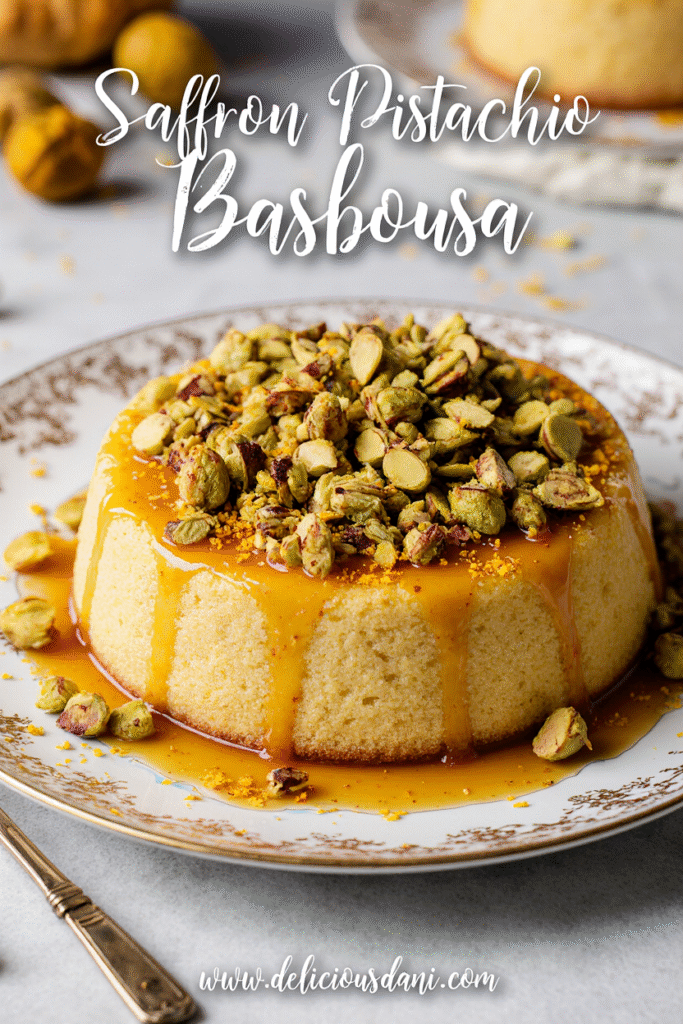
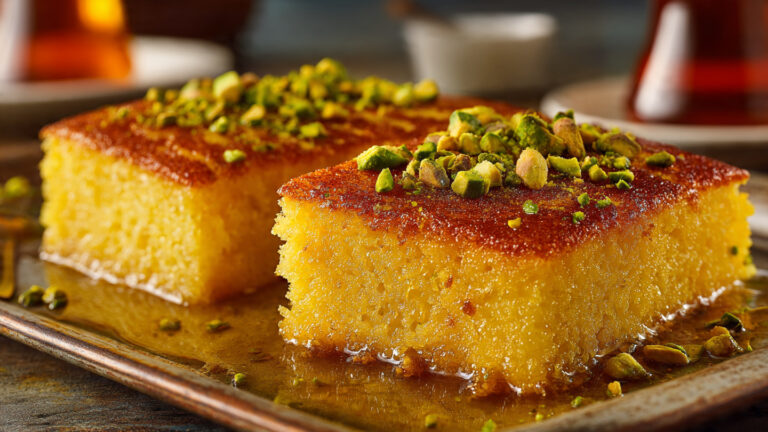
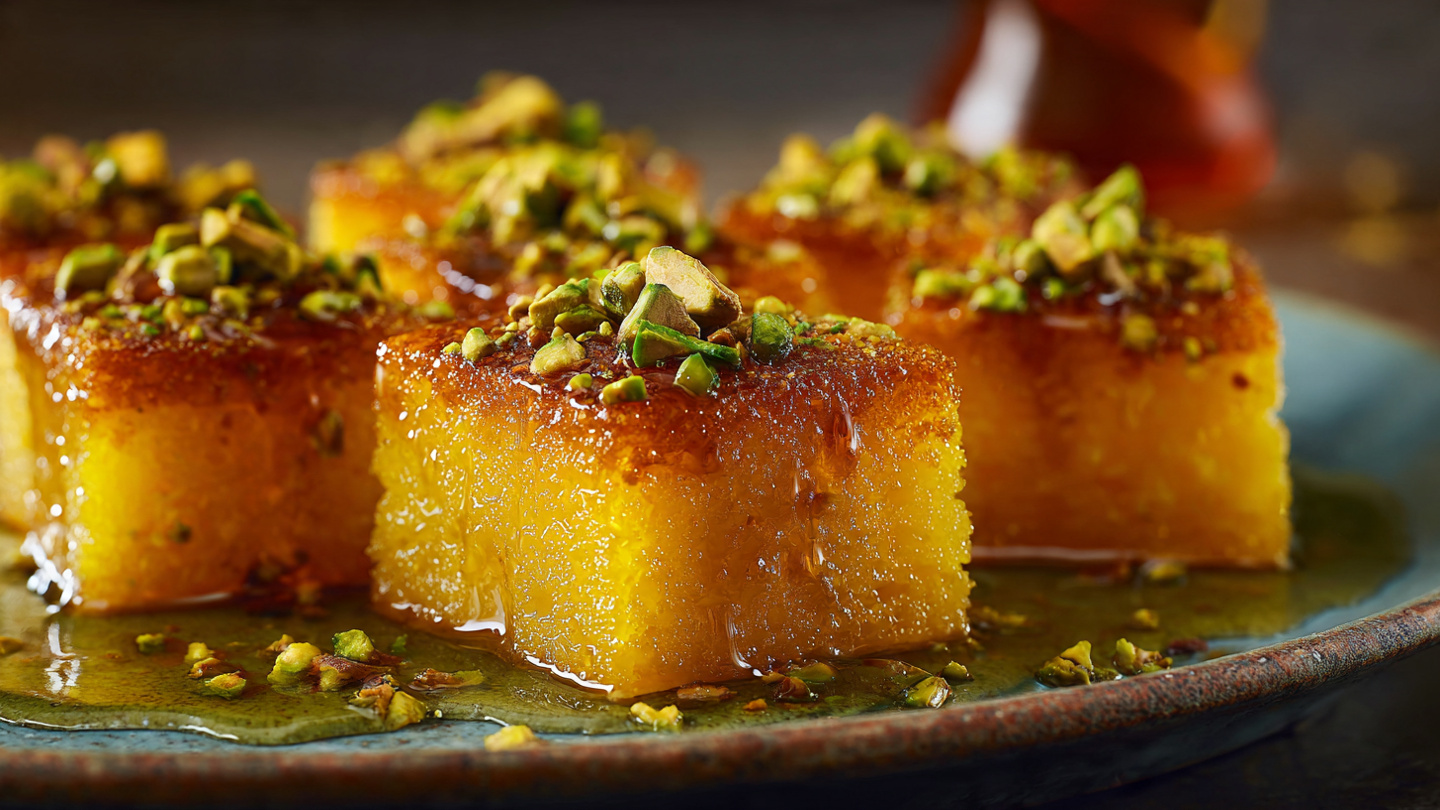
There’s something utterly magical about basbousa – that golden, syrup-soaked semolina cake that’s been delighting Middle Eastern families for generations. Today, I’m sharing my absolute favorite variation: Saffron Pistachio Basbousa, a luxurious twist on the classic that combines aromatic saffron threads with crunchy pistachios for a dessert that’s both elegant and comforting. I first fell in love with this recipe during a trip to Cairo, where a local baker showed me how a few precious saffron strands could transform an already beloved dessert into something truly extraordinary. The combination of the earthy semolina, the floral notes of saffron, and the rich nuttiness of pistachios creates a symphony of flavors that dance on your palate. Whether you’re preparing for Eid celebrations, hosting a dinner party, or simply craving something sweet and special, this basbousa will become your go-to showstopper. The best part? It’s surprisingly easy to make, requiring just one bowl and minimal effort for maximum impact. Trust me, once you try this saffron-infused version, you’ll never go back to plain basbousa again!
Overview of Recipe Content
This Saffron Pistachio Basbousa is perfect for special occasions, holidays, afternoon tea parties, or any time you want to impress guests with an exotic, Middle Eastern-inspired dessert. It’s a great recipe because it combines simple pantry ingredients with luxurious touches like saffron and pistachios, creating an impressive dessert without requiring advanced baking skills. The flavor profile is beautifully balanced: subtly sweet with floral saffron notes, nutty pistachio crunch, and that signature sticky-sweet syrup that makes basbousa so addictive. This recipe is perfect for anyone who loves Middle Eastern desserts, wants to try something different from typical Western cakes, or is looking for a dairy-forward dessert that’s moist, tender, and absolutely irresistible.
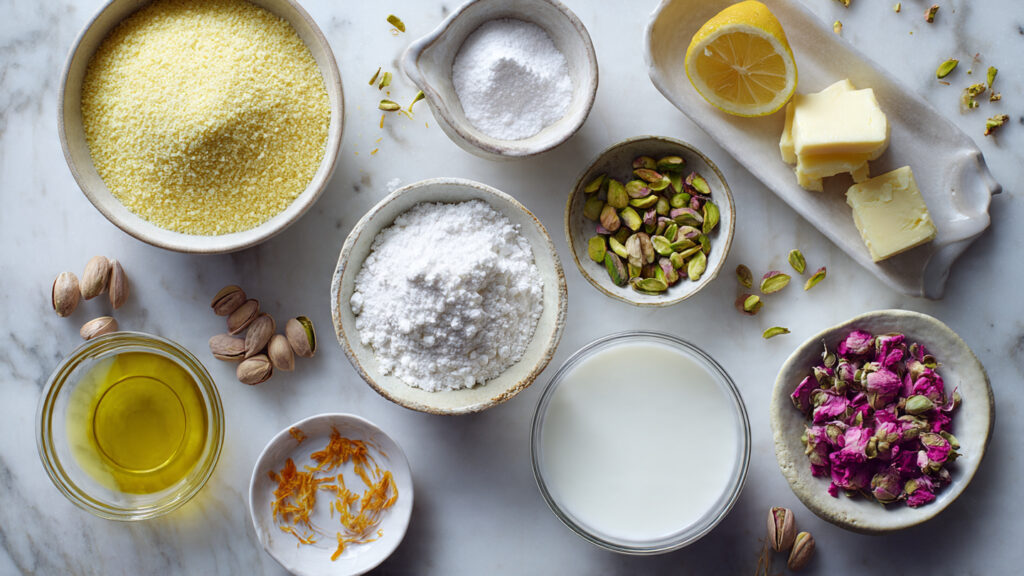
Ingredients
For the Cake:
| Ingredient | Quantity |
|---|---|
| Fine semolina | 2 cups |
| Granulated sugar | 1 cup |
| Plain yogurt (full-fat recommended) | 1 cup |
| Unsalted butter, melted | ½ cup |
| Milk | ¼ cup |
| Baking powder | 2 teaspoons |
| Vanilla extract | ½ teaspoon |
| Salt | ¼ teaspoon |
| Saffron threads | Generous pinch (about 15-20 threads) |
| Warm milk (for soaking saffron) | 2 tablespoons |
| Raw pistachios, roughly chopped | ¾ cup |
| Whole blanched almonds or pistachio halves | For decoration |
For the Sugar Syrup:
| Ingredient | Quantity |
|---|---|
| Granulated sugar | 1½ cups |
| Water | 1 cup |
| Fresh lemon juice | 1 tablespoon |
| Rose water (optional) | 1 teaspoon |
| Cardamom pods, lightly crushed | 2-3 pods |
| Saffron threads | Small pinch |
Tools Needed
- 9×13 inch baking pan
- Mixing bowl (large)
- Whisk or wooden spoon
- Small bowl (for soaking saffron)
- Medium saucepan (for syrup)
- Measuring cups and spoons
- Sharp knife (for scoring)
- Pastry brush (optional)
- Wire cooling rack
Suggested Substitutions and Additions
Substitutions:
- Semolina: If you can’t find fine semolina, you can use a combination of ½ cup all-purpose flour and 1½ cups semolina, though the texture will be slightly different
- Yogurt: Greek yogurt works beautifully and creates an even denser texture; sour cream is also an excellent substitute
- Butter: Use ghee for a more authentic, nutty flavor, or coconut oil for a dairy-free version (though you’ll need to replace the yogurt too)
- Pistachios: Almonds, walnuts, or hazelnuts work well, though they won’t provide the same vibrant green color
- Saffron: While saffron is the star here, you can substitute with ½ teaspoon ground cardamom or a tablespoon of orange blossom water for different aromatics
Additions:
- Add ½ cup shredded coconut to the batter for coconut basbousa
- Sprinkle sesame seeds on top before baking for extra crunch
- Drizzle with tahini after baking for a Middle Eastern twist
- Add orange zest to both the cake and syrup for a citrusy variation
- Top with clotted cream (kaymak) or whipped cream when serving
- Mix in ½ teaspoon ground cardamom for additional warmth
Dietary Modifications:
- Gluten-free: This recipe is naturally low in gluten (semolina contains less gluten than wheat flour), but for completely gluten-free, substitute with gluten-free semolina or a blend of almond flour and cornmeal
- Dairy-free: Use coconut yogurt, coconut oil instead of butter, and plant-based milk
- Lower sugar: You can reduce the sugar in the cake by up to ¼ cup, though I don’t recommend reducing the syrup sugar as it needs to achieve the right consistency
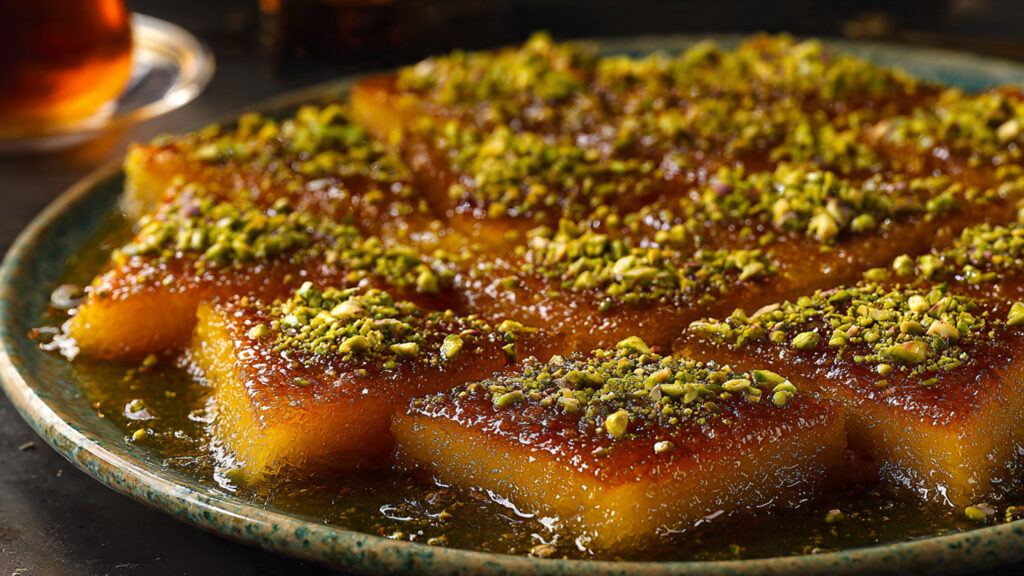
How to Make Saffron Pistachio Basbousa
Step 1: Prepare the Saffron and Preheat
Begin by soaking your saffron threads in 2 tablespoons of warm milk in a small bowl. Use your fingers to gently crush the saffron threads to help release their gorgeous golden color and distinctive aroma. Set this aside to steep for at least 10 minutes – the longer it steeps, the more intense the color and flavor will be. Meanwhile, preheat your oven to 350°F (175°C) and generously grease your 9×13 inch baking pan with butter or cooking spray. You can also line the bottom with parchment paper for easier removal, though it’s not strictly necessary. This soaking step is crucial because it allows the saffron to fully bloom and infuse the milk with its flavor, which will then be distributed throughout the entire cake.
Step 2: Mix the Dry and Wet Ingredients
In a large mixing bowl, combine the semolina, sugar, baking powder, and salt. Whisk these dry ingredients together to ensure even distribution. In a separate area of the same bowl (or another bowl if you prefer), add the yogurt, melted butter, milk, vanilla extract, and your saffron-infused milk. Whisk the wet ingredients together until smooth and well combined – you should see beautiful golden streaks from the saffron running through the mixture. Now, gradually fold the wet ingredients into the dry ingredients using a wooden spoon or spatula. Mix until just combined – don’t overmix, as this can make the basbousa tough. The batter should be thick but pourable, similar to a dense cake batter. Fold in ¾ of your chopped pistachios, reserving the rest for topping.
Step 3: Assemble and Score
Pour the batter into your prepared baking pan and use a spatula to spread it evenly into all corners. The batter should be about 1 to 1.5 inches thick. Tap the pan gently on the counter a few times to release any air bubbles. Now comes the signature basbousa technique: using a sharp knife, score the top of the batter into diamond or square shapes, cutting about halfway through the batter (but not all the way to the bottom). This traditional scoring serves multiple purposes – it helps the syrup penetrate more deeply, makes serving easier later, and creates an attractive presentation. Place one whole almond or pistachio half in the center of each scored piece. Sprinkle the remaining chopped pistachios evenly over the top for extra crunch and visual appeal.
Step 4: Bake to Golden Perfection
Place the pan in your preheated oven and bake for 35-40 minutes, or until the top is beautifully golden brown and a toothpick inserted into the center comes out clean. The edges should be slightly darker and pulling away from the sides of the pan. The basbousa should have a firm top with a slight spring when touched. While the basbousa is baking, you’ll notice the most incredible aroma filling your kitchen – that combination of toasted semolina, butter, and saffron is absolutely intoxicating! Keep an eye on it during the last 10 minutes to ensure it doesn’t over-brown; if the top is browning too quickly, you can loosely tent it with aluminum foil.
Step 5: Prepare the Sugar Syrup
While your basbousa is baking, prepare the syrup so it has time to cool slightly. In a medium saucepan, combine the sugar, water, lemon juice, crushed cardamom pods, and a small pinch of saffron. Bring the mixture to a boil over medium-high heat, stirring occasionally until the sugar completely dissolves. Once boiling, reduce the heat to medium-low and let it simmer for 8-10 minutes without stirring. The syrup should thicken slightly and reach a consistency similar to thin honey – it should coat the back of a spoon but still pour easily. Remove from heat and stir in the rose water if using. Remove the cardamom pods if you prefer (though some people like to leave them in for presentation). The key here is timing: you want the syrup to be warm (not boiling hot) when you pour it over the hot basbousa.
Step 6: Soak with Syrup and Cool
This is the most critical step for perfect basbousa! As soon as the basbousa comes out of the oven, while it’s still piping hot, immediately pour the warm (not hot) syrup evenly over the entire surface. You want to use ALL the syrup – yes, it will seem like a lot, but basbousa should be thoroughly soaked and sticky. Pour slowly and evenly, making sure to get syrup into all the scored lines. You’ll hear a wonderful sizzling sound as the syrup meets the hot cake. Use a spoon to ensure the syrup is distributed into the corners and crevices. The basbousa will absorb most of the syrup as it cools. Let it sit at room temperature for at least 2-3 hours (or up to overnight) to fully absorb the syrup before cutting and serving. This patience is rewarded with the perfect texture – not soggy, but beautifully moist and sweet.
What to Serve with It
Saffron Pistachio Basbousa is rich and sweet, so it pairs beautifully with beverages and accompaniments that provide contrast. Serve it with strong, unsweetened Turkish or Arabic coffee – the bitterness of the coffee cuts through the sweetness perfectly and is the traditional pairing. You could also offer mint tea or cardamom tea for a refreshing complement. For a truly luxurious experience, serve each piece with a small dollop of thick clotted cream (kaymak) or unsweetened whipped cream on the side, which adds richness and helps balance the sweetness.
Some people also love serving basbousa with vanilla ice cream, letting it melt slightly into the warm cake. For an afternoon tea service, pair it with fresh fruit like sliced strawberries or figs to add freshness and acidity. If you’re serving this for a special occasion, consider offering it alongside other Middle Eastern desserts like baklava or kunafa for a beautiful dessert spread.
Tips for Making It Perfect
- Use room temperature ingredients: Make sure your yogurt, milk, and eggs (if adding) are at room temperature before mixing. This ensures a smoother batter and more even baking. Cold ingredients can cause the melted butter to solidify in clumps.
- Don’t skip the saffron soaking: Soaking saffron in warm liquid is essential for extracting its flavor and color. If you add dry saffron directly to the batter, it won’t distribute evenly and you’ll miss out on that gorgeous golden hue. For even more intense flavor, soak the saffron for 30 minutes or even overnight in the refrigerator.
- Temperature matters for the syrup: The secret to perfect basbousa texture is pouring warm syrup over hot cake OR cold syrup over hot cake. Never use hot syrup on hot cake (too soggy) or cold syrup on cold cake (won’t absorb). The temperature difference is what allows proper absorption without making the cake mushy.
- Let it fully absorb before cutting: Resist the temptation to cut into your basbousa right away! It needs at least 2-3 hours (preferably longer) to fully absorb the syrup and set. Cutting too early will result in messy, falling-apart pieces. For cleanest cuts, use a very sharp knife dipped in hot water and wiped clean between cuts.
- Toast your pistachios for deeper flavor: While not necessary, lightly toasting your chopped pistachios in a dry pan for 2-3 minutes before adding them to the batter intensifies their nutty flavor and adds extra crunch.
- Score deeply and decisively: When scoring the top before baking, make sure your cuts are at least ½ inch deep. Shallow scoring won’t allow the syrup to penetrate properly and will make cutting difficult later. Use a ruler for perfectly even pieces if you want a professional presentation.
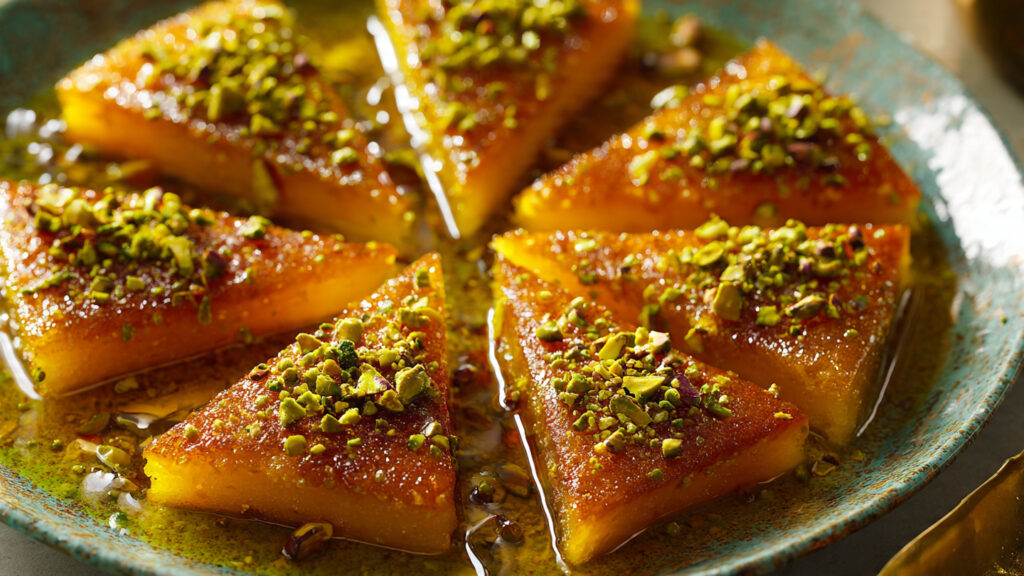
Storage Instructions
Room Temperature: Basbousa actually improves with time and can be stored at room temperature for up to 5 days. Keep it covered with plastic wrap or aluminum foil directly on the surface of the cake to prevent it from drying out. The syrup acts as a preservative, keeping the cake moist. Store in a cool, dry place away from direct sunlight.
Refrigerator: If your kitchen is particularly warm or humid, you can refrigerate the basbousa for up to 1 week. Store it covered in the baking pan or transfer pieces to an airtight container. Let it come to room temperature before serving for the best texture, or warm individual pieces in the microwave for 10-15 seconds.
Freezer: Basbousa freezes beautifully for up to 3 months! Cut it into individual portions, wrap each piece tightly in plastic wrap, then place them in a freezer-safe container or bag. To serve, thaw at room temperature for 2-3 hours or overnight in the refrigerator. You can also warm frozen pieces directly in the microwave for 20-30 seconds.
Reheating: While basbousa is traditionally served at room temperature, many people enjoy it slightly warm. To reheat, place a piece on a microwave-safe plate and warm for 10-20 seconds, or heat in a 300°F oven for 5-7 minutes. Don’t overheat or the syrup can become too thin and the cake may dry out.
General Information
Basbousa (also spelled basboussa, basboosa, or hareeseh depending on the region) is one of the most beloved desserts across the Middle East and North Africa, with each country claiming its own special version. The name comes from the Arabic word “basbousa,” though its exact etymology is debated among food historians. What we do know is that this semolina cake has been enjoyed for centuries, with some historians tracing its origins back to Ottoman Empire times when semolina desserts were particularly popular in palace kitchens.
The beauty of basbousa lies in its simplicity and versatility – the basic recipe requires just semolina, yogurt, sugar, and syrup, yet it can be transformed with countless variations. In Egypt, it’s often topped with almonds and sometimes includes coconut. In Turkey (where it’s called “revani”), it’s typically flavored with lemon. Greek “ravani” often includes semolina flour and is soaked in lemon syrup. Lebanese and Syrian versions sometimes incorporate orange blossom water or rose water.
The addition of saffron to basbousa is a more modern, luxurious twist that elevates this humble cake into something fit for special celebrations. Saffron, being one of the world’s most expensive spices, was historically reserved for royalty and special occasions, making saffron pistachio basbousa the perfect choice for Eid celebrations, weddings, or any time you want to honor your guests with something truly special.
Frequently Asked Questions (FAQ)
Q: Can I make basbousa without yogurt? A: While yogurt is traditional and provides the characteristic tangy flavor and moist texture, you can substitute it with sour cream, buttermilk, or even a mixture of milk and lemon juice (1 cup milk + 1 tablespoon lemon juice, left to sit for 5 minutes). The texture might be slightly different, but it will still be delicious. Some recipes use tahini instead for a different flavor profile.
Q: Why is my basbousa dry and crumbly? A: This usually happens for one of three reasons: not enough syrup was absorbed, the basbousa was overbaked, or the ratio of wet to dry ingredients was off. Make sure you’re pouring ALL the syrup over the hot cake and letting it sit for several hours to fully absorb. Also, don’t overbake – the basbousa should be golden but still moist. Following the recipe measurements precisely is important for proper texture.
Q: Can I use regular flour instead of semolina? A: Semolina is what gives basbousa its characteristic grainy texture and golden color, so substituting with regular all-purpose flour will create a completely different cake (more like a regular sponge cake). If you can’t find semolina, look for “cream of wheat” which is essentially the same thing. For a true basbousa experience, semolina is irreplaceable.
Q: My syrup didn’t soak in properly – what went wrong? A: The most common issue is temperature mismatch. The syrup should be warm (not boiling hot or cold) and poured immediately over the piping hot cake straight from the oven. If both the cake and syrup are cold, they won’t combine properly. Also, make sure you scored the cake deeply before baking – this creates channels for the syrup to penetrate.
Q: Is saffron really necessary, or can I skip it? A: While you can technically make basbousa without saffron, it’s what makes this recipe special and distinctive. Saffron provides a unique floral, slightly earthy flavor and that gorgeous golden color that can’t be replicated. If cost is a concern, a little goes a long way – 15-20 threads is plenty. However, if you must skip it, you can substitute with ½ teaspoon of ground cardamom or 1 tablespoon of orange blossom water for a different but still delicious flavor.
Q: How do I prevent the basbousa from sticking to the pan? A: Generously grease your pan with butter or cooking spray, making sure to get into all the corners. You can also line the bottom with parchment paper for extra insurance, leaving some overhang on the sides to lift the entire cake out once cooled. Another trick is to run a knife around the edges while the basbousa is still warm (right after adding syrup) to prevent sticking as it cools.
Conclusion
I hope you’re as excited to make this Saffron Pistachio Basbousa as I was to share it with you! This recipe holds a special place in my heart, and I know it will become a cherished favorite in your home too. The combination of aromatic saffron, crunchy pistachios, and that irresistibly sticky-sweet texture is simply unforgettable. Whether you’re making it for a special celebration or just because you’re craving something extraordinary, this dessert never disappoints.
I’d absolutely love to hear how your basbousa turns out! Please leave a comment below sharing your experience, any modifications you made, or questions you might have. If you loved this recipe, don’t forget to rate it with five stars – it helps other home bakers find this recipe too.
Be sure to snap a photo of your beautiful golden creation and share it on Instagram by tagging me – I feature my favorite recreations in my stories! And if you’re a Pinterest lover like me, please pin this recipe to your dessert board so you can find it easily whenever that basbousa craving hits. Happy baking, and may your kitchen always smell like saffron and butter!
Nutritional Information (per serving)
Based on 24 servings
| Nutrient | Amount |
|---|---|
| Calories | 245 |
| Total Fat | 9g |
| Saturated Fat | 4g |
| Cholesterol | 15mg |
| Sodium | 85mg |
| Total Carbohydrates | 38g |
| Dietary Fiber | 1g |
| Sugars | 24g |
| Protein | 4g |
| Calcium | 45mg |
| Iron | 1mg |
Note: Nutritional values are approximate and may vary based on specific ingredients and portion sizes used.